What You Pay
We don't have a Woodbranch-specific price list to quote you here, and we're not going to make one up. What we can tell you is what drives the cost on a house like yours: Woodbranch's housing stock centers on 1982, which puts most doors here on steel sectional panels with extension-spring hardware rather than the torsion setups that came standard on newer construction elsewhere in the service area.
Extension spring inspections
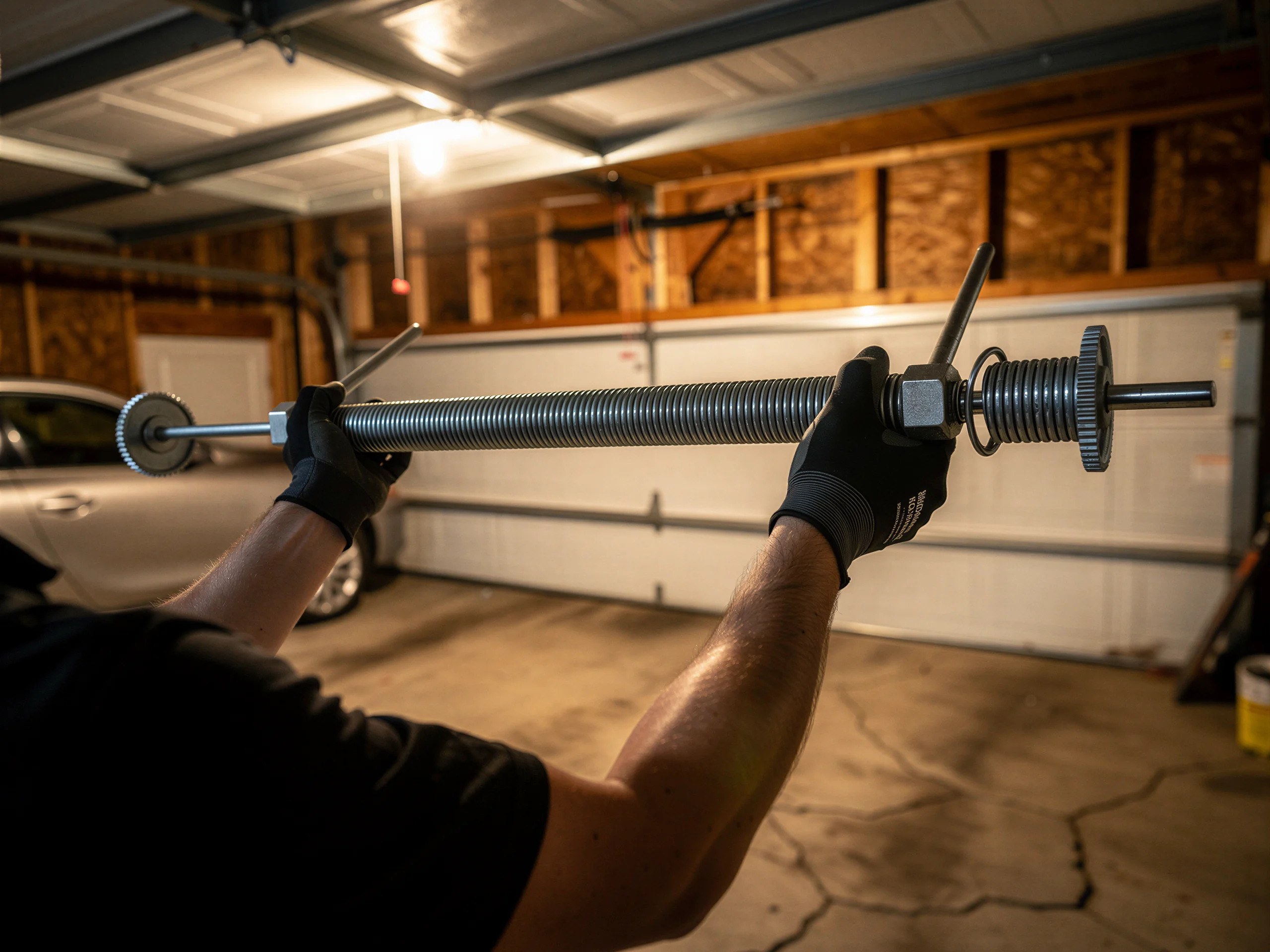
Extension springs are simpler to inspect but wear differently than torsion springs, and that changes what a maintenance visit actually covers - more time on the pulley and cable system, less on torsion bar alignment.
Route-scheduled service calls
With roughly 558 households in Woodbranch, this isn't a huge market for us, so we schedule it as part of a route out from The Woodlands rather than running a dedicated crew here.
Drive not in pricing
That 20-mile drive is built into how we batch service calls, not into what we charge for parts or labor. If you want a number, ask when you call - we'll give you a real one instead of a placeholder.
What Can Go Wrong
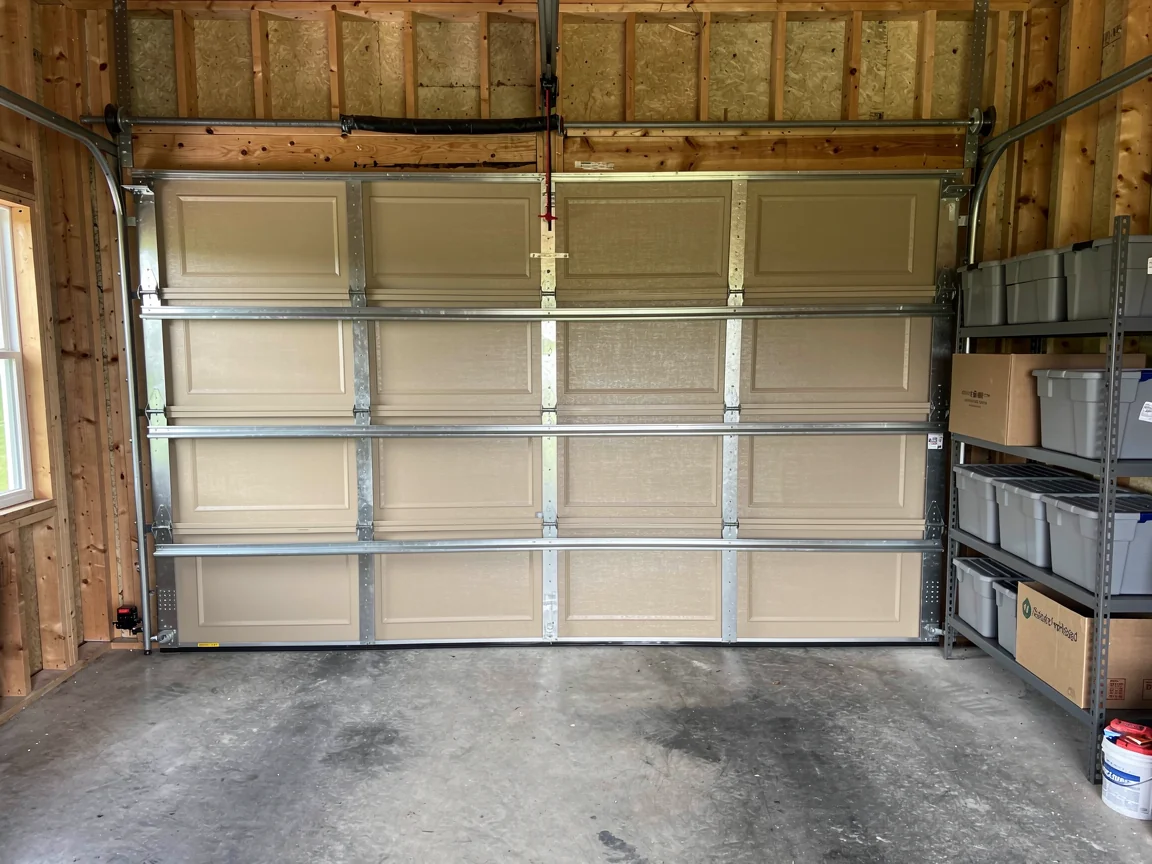
A door built around 1982 is now in its fifth decade, and the failures show up in predictable order. Extension spring cables fray at the drum end first, usually before the spring itself gives out.
Pulley groove wear
The pulleys those cables run over wear a groove deep enough to throw the cable off-track, which is a different fix than a snapped spring and often mistaken for one. Steel panels from that era are thinner-gauge than what's sold today, so bottom panels near grade take dents and rust-through faster, especially around the weatherstrip channel.
Binding original rollers
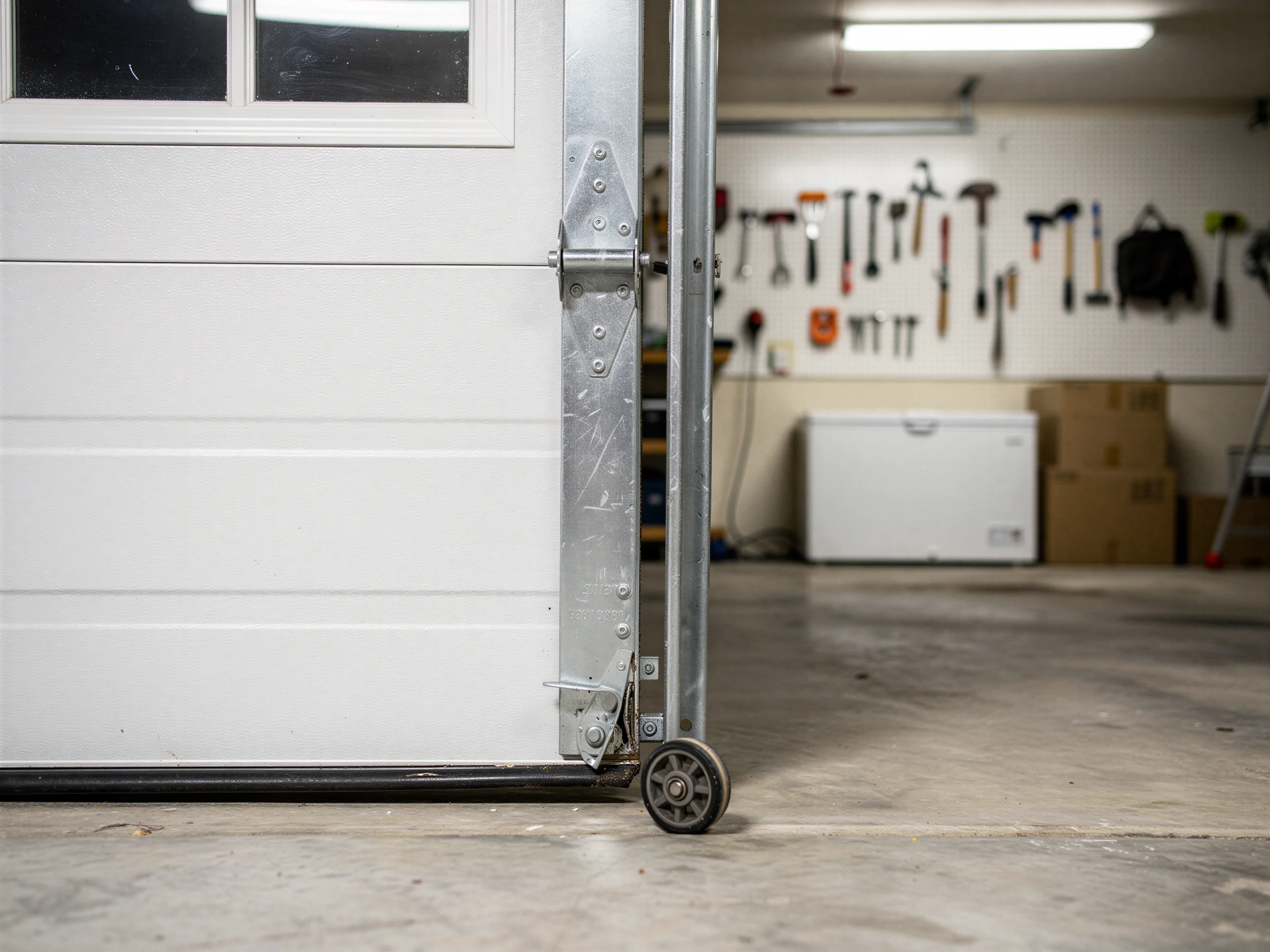
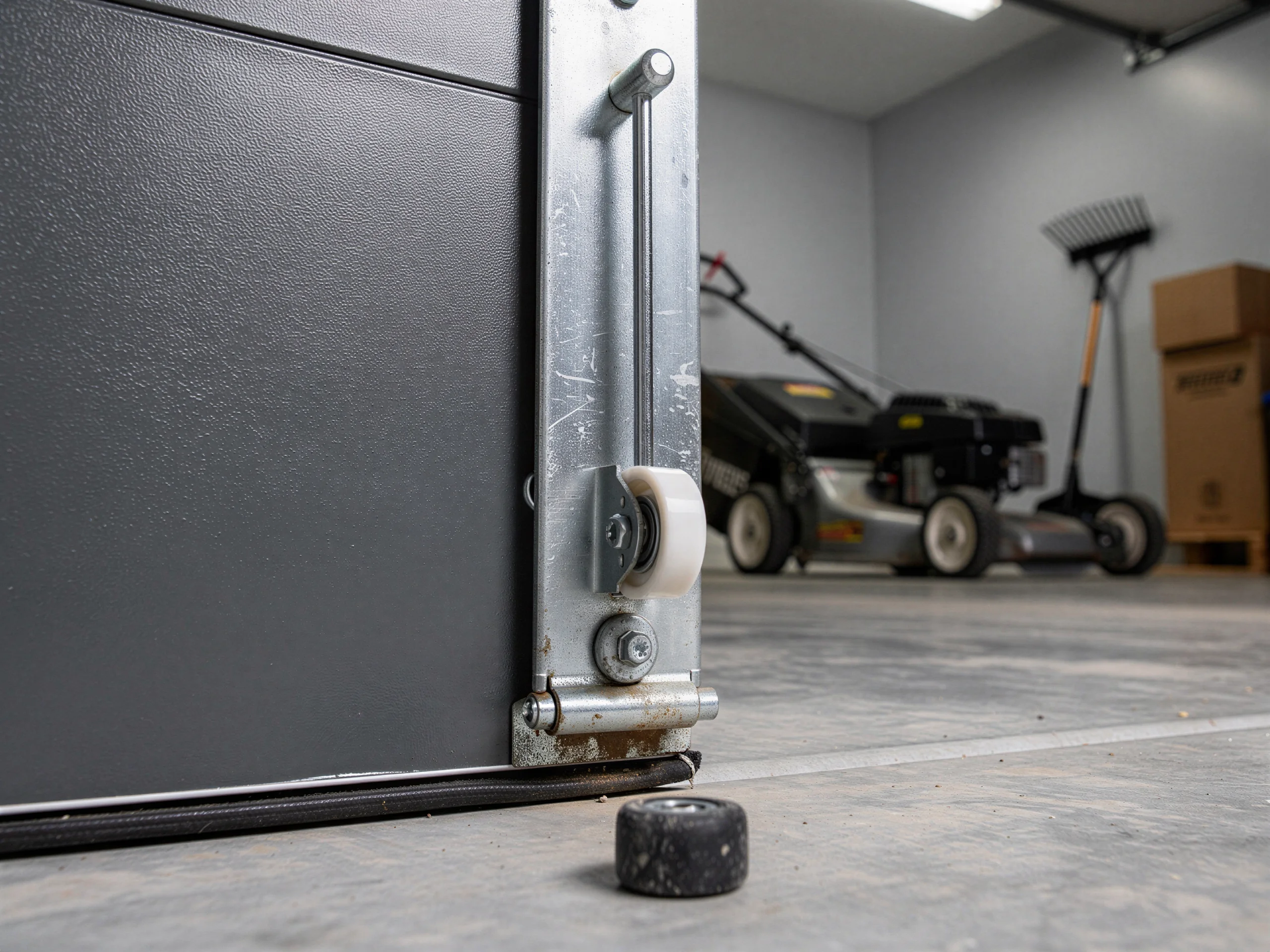
Rollers on these doors are frequently still the original steel-on-steel type - noisy, and prone to binding in the track as the track itself racks out of square over 40 years of use.
End-of-life hardware pattern
None of this is exotic. It's just the ordinary end-of-life pattern for hardware this age, and it's why a maintenance visit on a 1982 door looks at different points than one on a door built in 2005.
Why This Fails Locally
Houston-area heat is the other half of the story. F3 classifies this climate band as moderate on heat load, which still means long stretches of high humidity and summer heat that work on anything rubber or lubricated. Extension springs, unlike torsion springs, sit exposed along the horizontal track rather than enclosed over the door - that puts the coil itself in the same heat and moisture cycle as everything else in the garage, accelerating the fatigue that eventually snaps a cable or stretches a spring out of calibration. On a $87,000 median income block like Woodbranch's, a seized opener motor or a cable failure isn't a small repair bill, which is exactly why catching the wear in the pulley and cable before it fails saves the bigger cost later. This is a fact about Woodbranch's building era meeting Gulf Coast climate, not a generic claim - a torsion-spring door of the same age handles the same heat differently because the hardware sits enclosed.
What Is on the Truck
For a 1982-era door we carry extension spring sets sized to the common panel weights from that build period, replacement cables and drums, and steel rollers in a few common bearing grades since original hardware on these doors is rarely a drop-in match anymore.
Weatherstrip for older tracks
We also stock weatherstrip channel stock cut to older track widths, because newer standard-width strip doesn't always seat right on doors this age. What we don't carry on every run is a replacement panel - steel panel colors and rib profiles from the early '80s aren't something we stock off the truck, so a dented panel on a door this old sometimes means ordering it ahead rather than fixing it same-visit.
Cosmetic panel match lead time
That's the honest limit: we can tune, lubricate, re-cable, and replace springs and rollers on the spot, but a cosmetic panel match on a 40-year-old door takes a lead time we won't pretend away.
Can You Do This Yourself
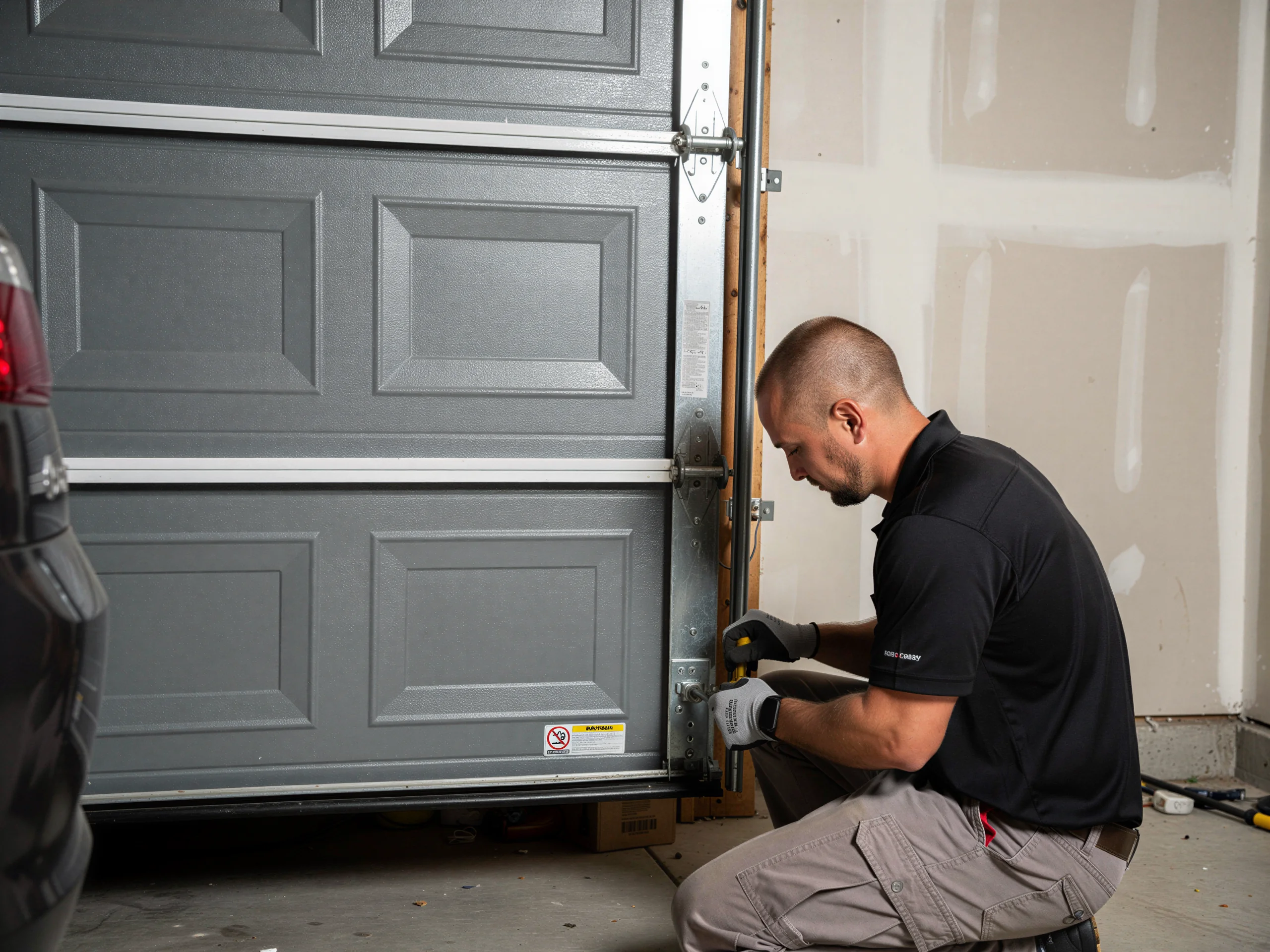
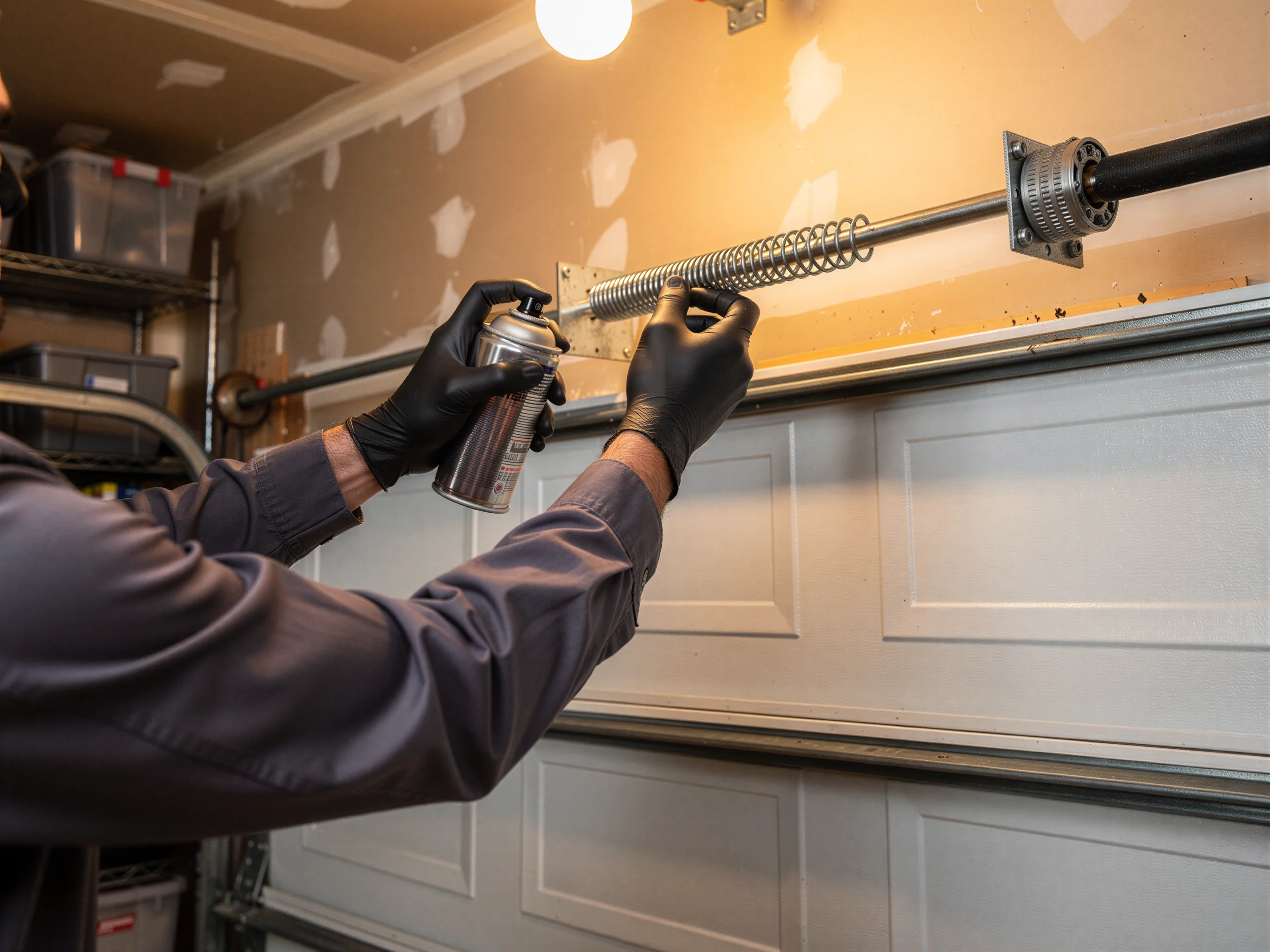
Lubricating rollers, hinges, and the track with a proper garage door lubricant (not WD-40, which washes out and attracts grit) is fine to do yourself, and it's the single best thing an owner can do between visits. Checking weatherstrip for cracking and tightening loose track bolts is also reasonable DIY work. What isn't: touching the extension springs themselves. A stretched or snapped extension spring on a door this size holds enough stored tension to cause a serious injury, and because these are 1982-era doors, the spring-to-track hardware is old enough that the usual safety cable may be missing or degraded. If you see a frayed cable, a gouged pulley groove, or a spring that looks stretched longer on one side than the other, that's a call, not a weekend project.
Talk to a local pro
Garage door service in The Woodlands?
Same-day service with honest, upfront quotes.