What You Pay
We don't post a flat number for Woodbranch because the job we quote on the phone almost always changes once we're looking at the actual spring or opener.
Batching Woodbranch calls
What we can tell you is that Woodbranch sits about 20 miles from our base in The Woodlands, and that trip is built into how we schedule the day - we batch Woodbranch calls rather than treat each one as a solo run, which keeps the truck roll reasonable.
Higher-income upgrade requests
Median household income here runs around $87,000, noticeably higher than the roughly $74,424 median across the wider service area, and we see that reflected in the calls: more owners asking for a full opener swap or insulated panel replacement instead of patching a 40-year-old door back together one more time.
Uncommon parts pricing
With only about 558 households in Woodbranch itself, this isn't a high-volume route for us, so we're straightforward that pricing on uncommon parts - an obsolete spring size or a discontinued panel profile - can run higher here simply because stocking them for a small number of homes doesn't make sense for the truck.
What Can Go Wrong
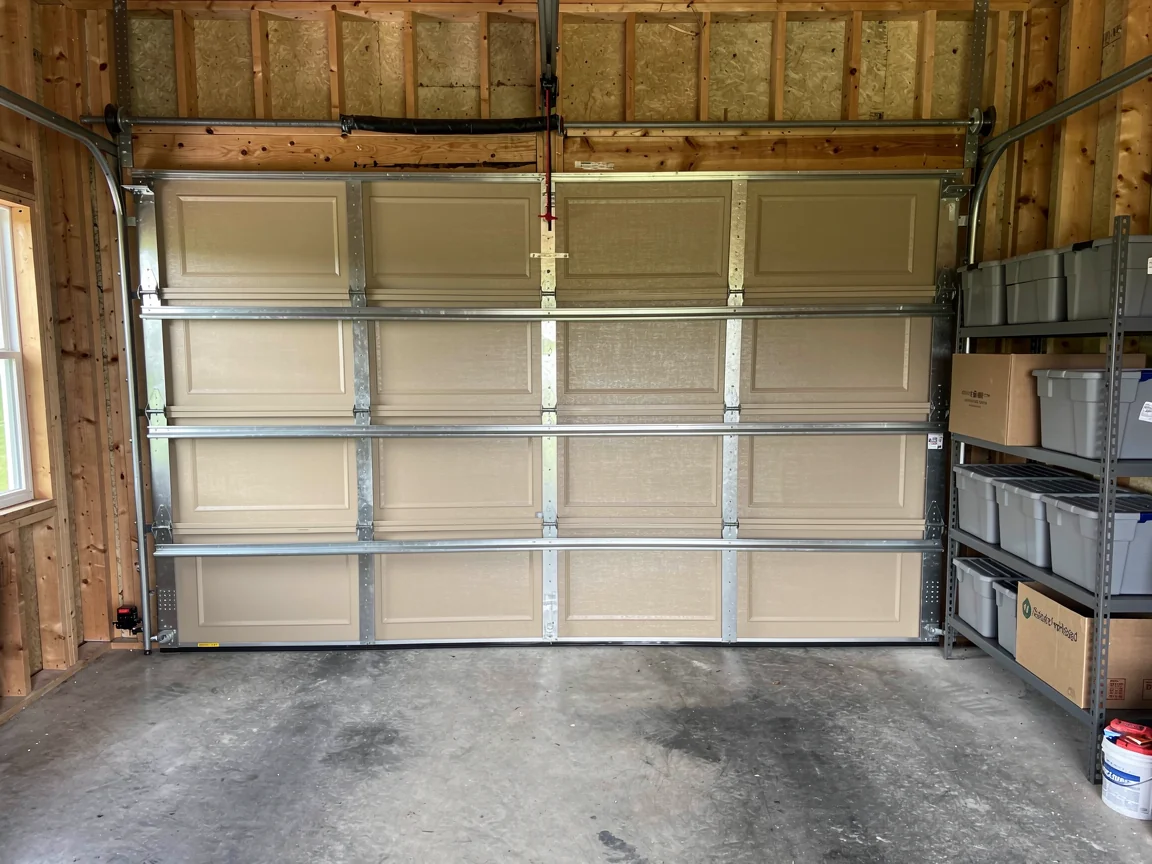
The fault we see most in Woodbranch isn't a broken spring, it's a worn-out extension spring setup that was never upgraded to torsion hardware. A big share of the housing stock in this part of the service area went up in the 1980s and 90s, and Woodbranch's own median build year lands around 1982.
Galvanized coating loss
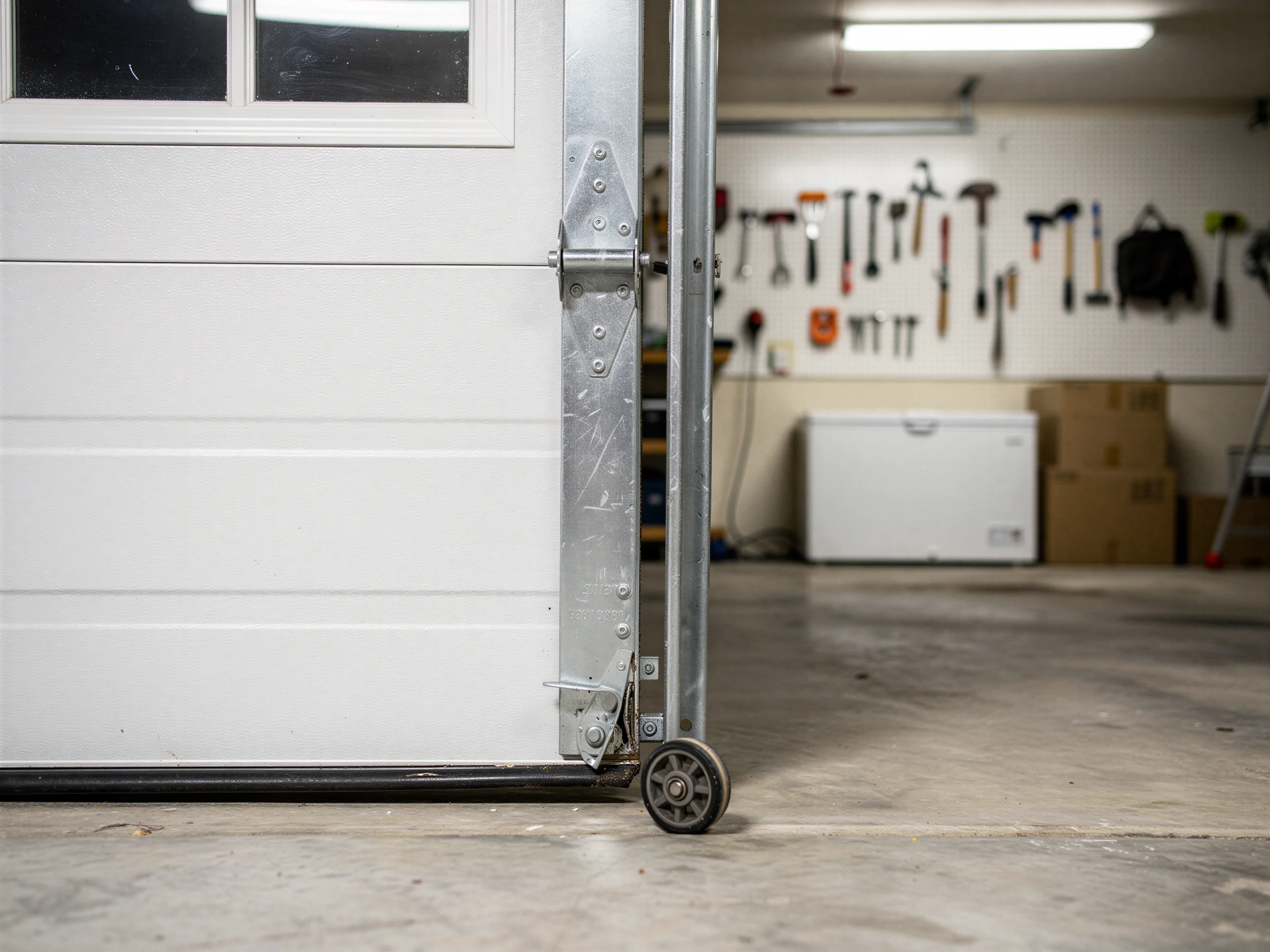
Doors from that era were commonly hung with side-mounted extension springs and steel tracks sized to openers that have long since been discontinued. After close to four decades, the galvanized coating on those springs is usually gone, the safety cables are often missing entirely, and the track brackets have worked loose from the same lag bolts since installation.
Strained original openers
On a door that old, the opener itself is frequently the original chain-drive unit, straining to lift a panel that's heavier than it was designed for because of sagging and hardware fatigue.
Decades of cycling
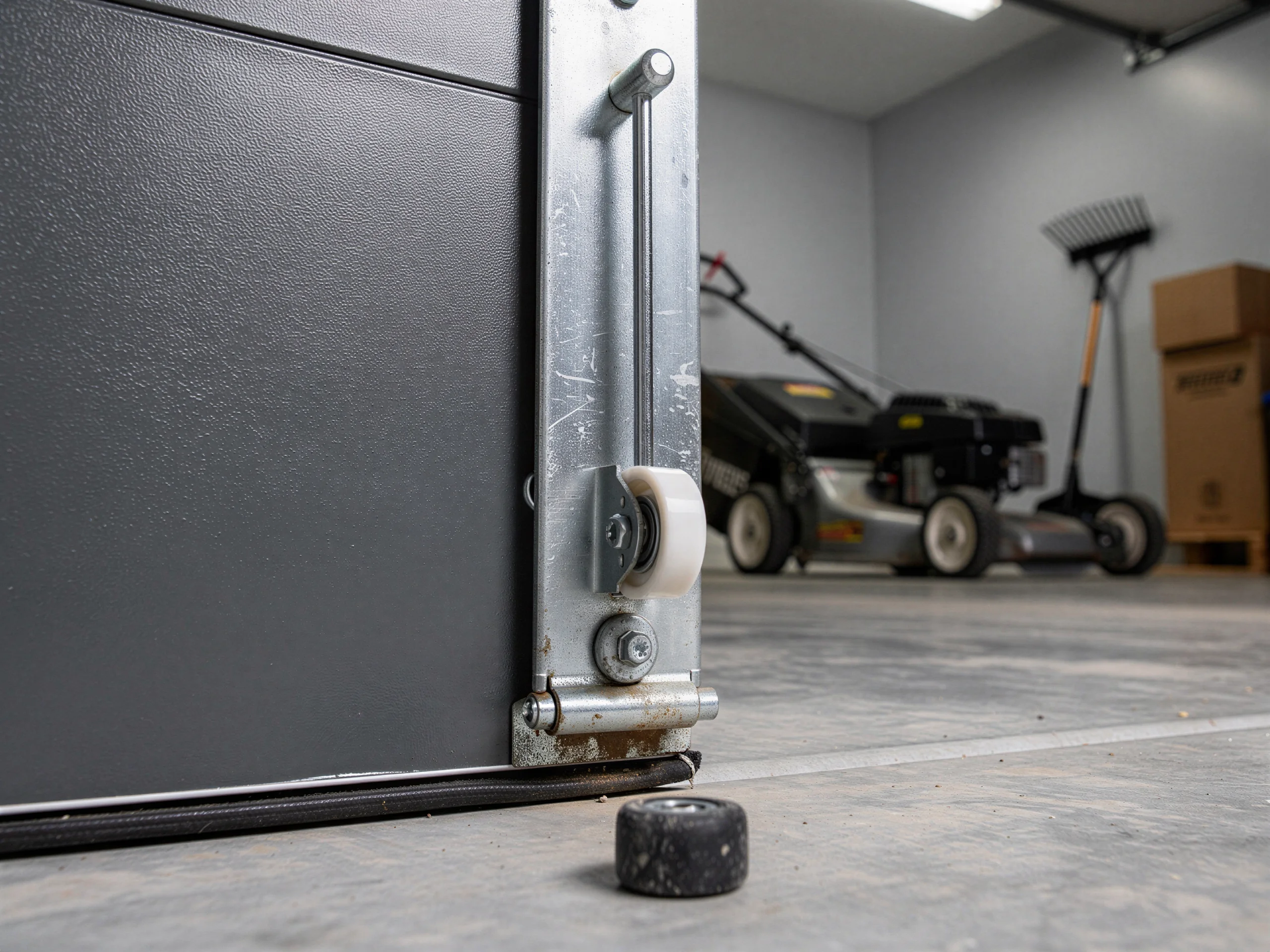
We also see nylon rollers cracked from age rather than from heat - this area sits in a moderate heat climate band, so the failure here is more about decades of cycling than scorching summers wrecking plastic.
Why This Fails Locally
The reason this matters specifically in Woodbranch, and not as a generic warning, comes down to the age math. Across the broader service area, homes were built anywhere from 1971 to 2012, with a median around 1988. Woodbranch's own median sits closer to 1982, a few years ahead of that curve, which means a larger share of its garage doors are at or past the point where extension-spring systems and their original openers are due for replacement rather than repair. A door hung in 1982 has had roughly four decades of daily cycles on hardware that was never meant to last that long without a spring swap at the halfway mark. Newer pockets of the service area - built in the 1990s and 2000s - simply haven't hit that wall yet. That's the local fact that drives our Woodbranch calls: fewer one-off fixes, more full-system replacements, because the parts being replaced are original to a house built when Reagan was in his first term.
What Is on the Truck
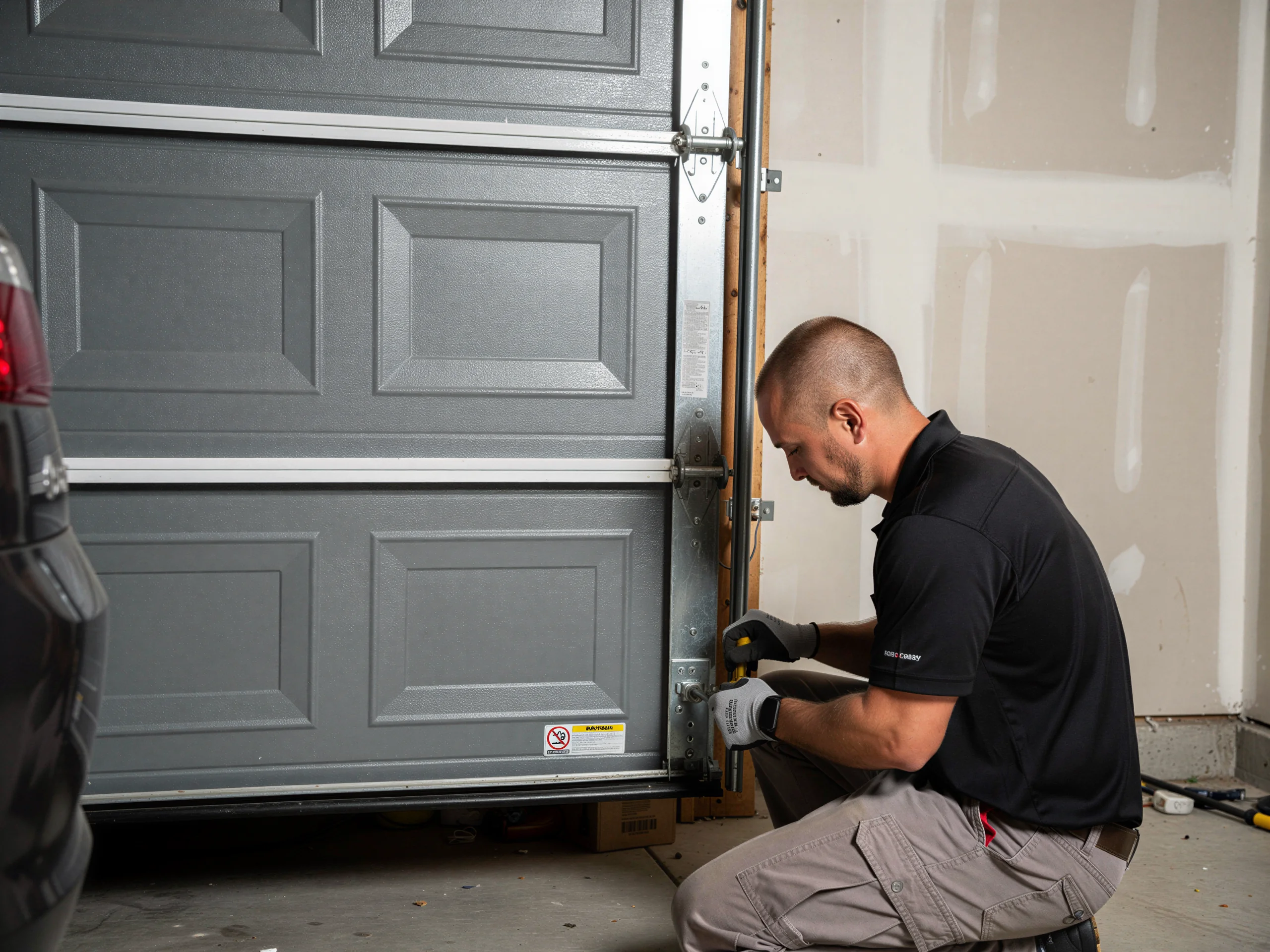
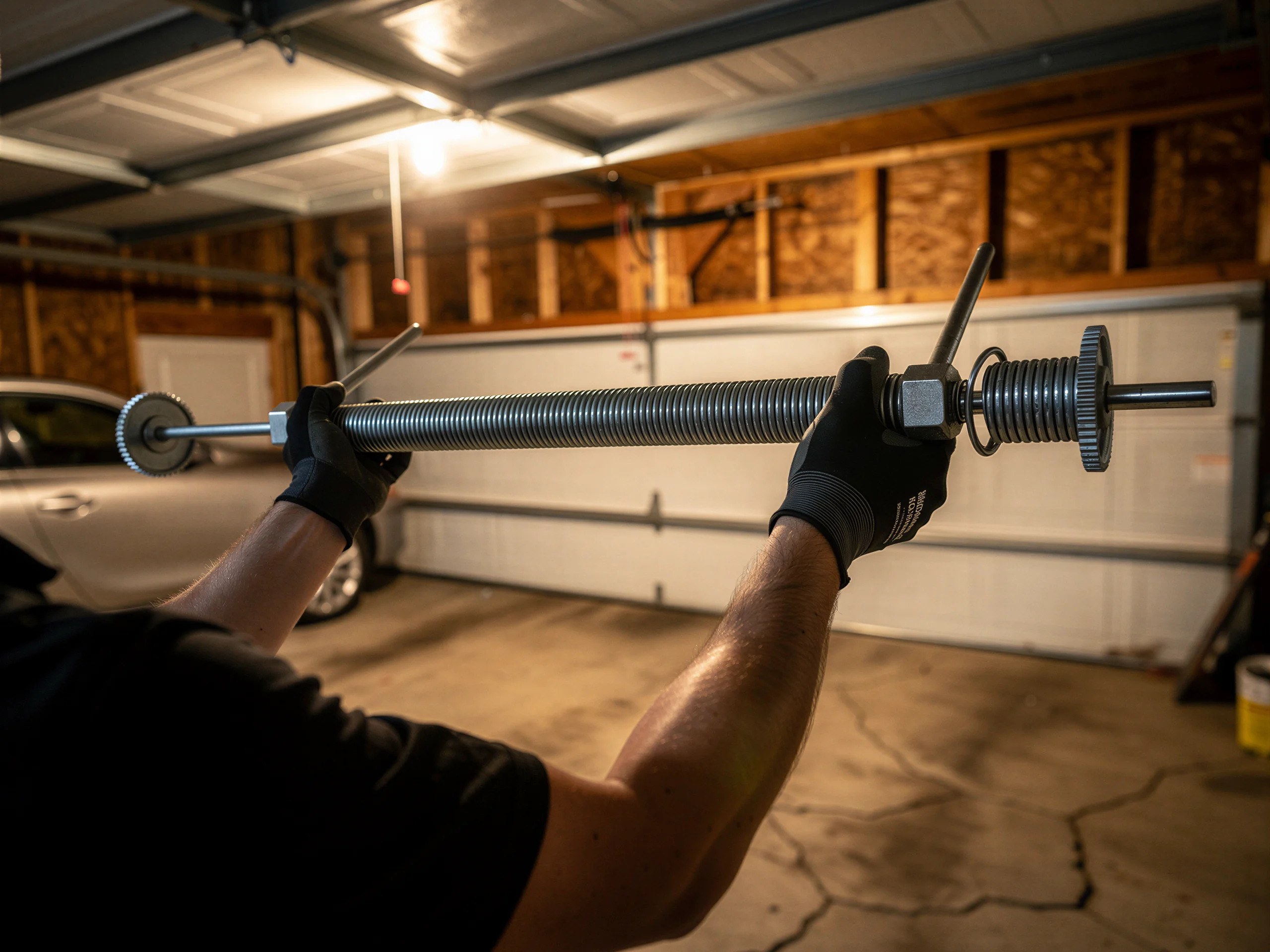
For Woodbranch calls we load torsion conversion hardware along with standard replacement springs, because so many of the doors out this way are still running the original side-mount extension setup described above.
Track and bracket stock
We carry a range of steel tracks and brackets sized for the door widths common to 1980s construction, plus safety cables to bring older extension systems up to a basic safety standard even when a full torsion conversion isn't in the budget that day.
Opener unit stock
We keep standard nylon and steel rollers on hand, along with a stock of chain-drive and belt-drive opener units, since swapping a dying 1980s chain-drive opener is one of the more common Woodbranch jobs.
Special-order panel profiles
What we don't carry is every obsolete panel profile from that era - if a specific discontinued panel design needs matching rather than a full door replacement, that part may need to be special-ordered, which adds lead time we're upfront about before we start.
Can You Do This Yourself
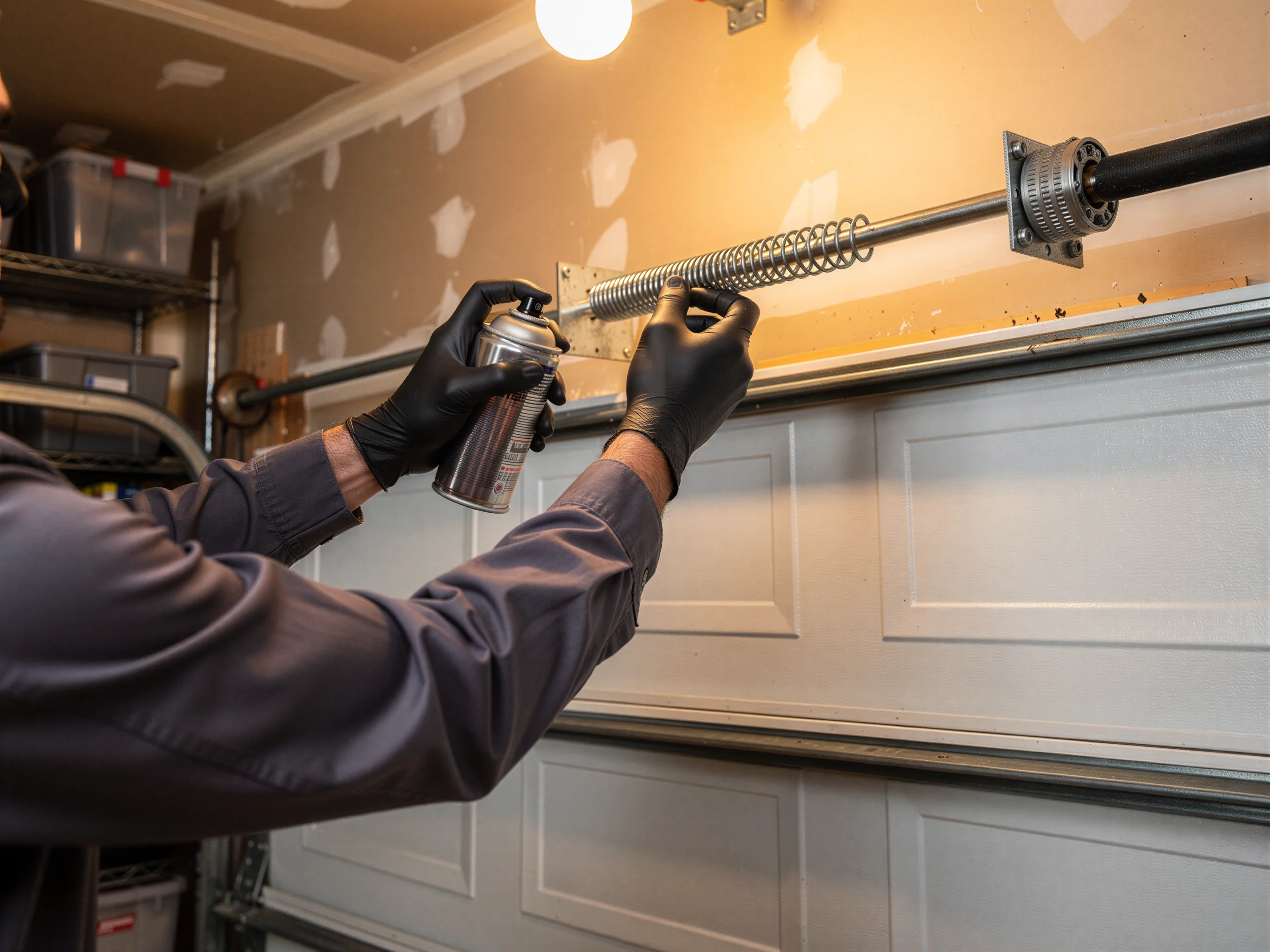
Lubricating rollers and hinges, tightening visible bolts on the track, and clearing the photo-eye sensors are all fine to handle yourself, and doing them twice a year will extend the life of hardware that's already decades old in a lot of Woodbranch homes. What you should not touch is the spring itself, torsion or extension - on a door this old, the spring is under more stored tension than it was when new, not less, because it's been compensating for wear elsewhere in the system. If your house dates to the early 1980s and the door still has the original extension springs with no visible safety cables, that's not a DIY tightening job; it's a sign the whole lift system is due for a look before a cable snaps under load.
Talk to a local pro
Garage door service in The Woodlands?
Same-day service with honest, upfront quotes.