What You Are Seeing
The door won't go up, or it goes up and slams back down. The opener runs but the door doesn't move, or it moves a few inches and stalls.
Broken spring symptoms
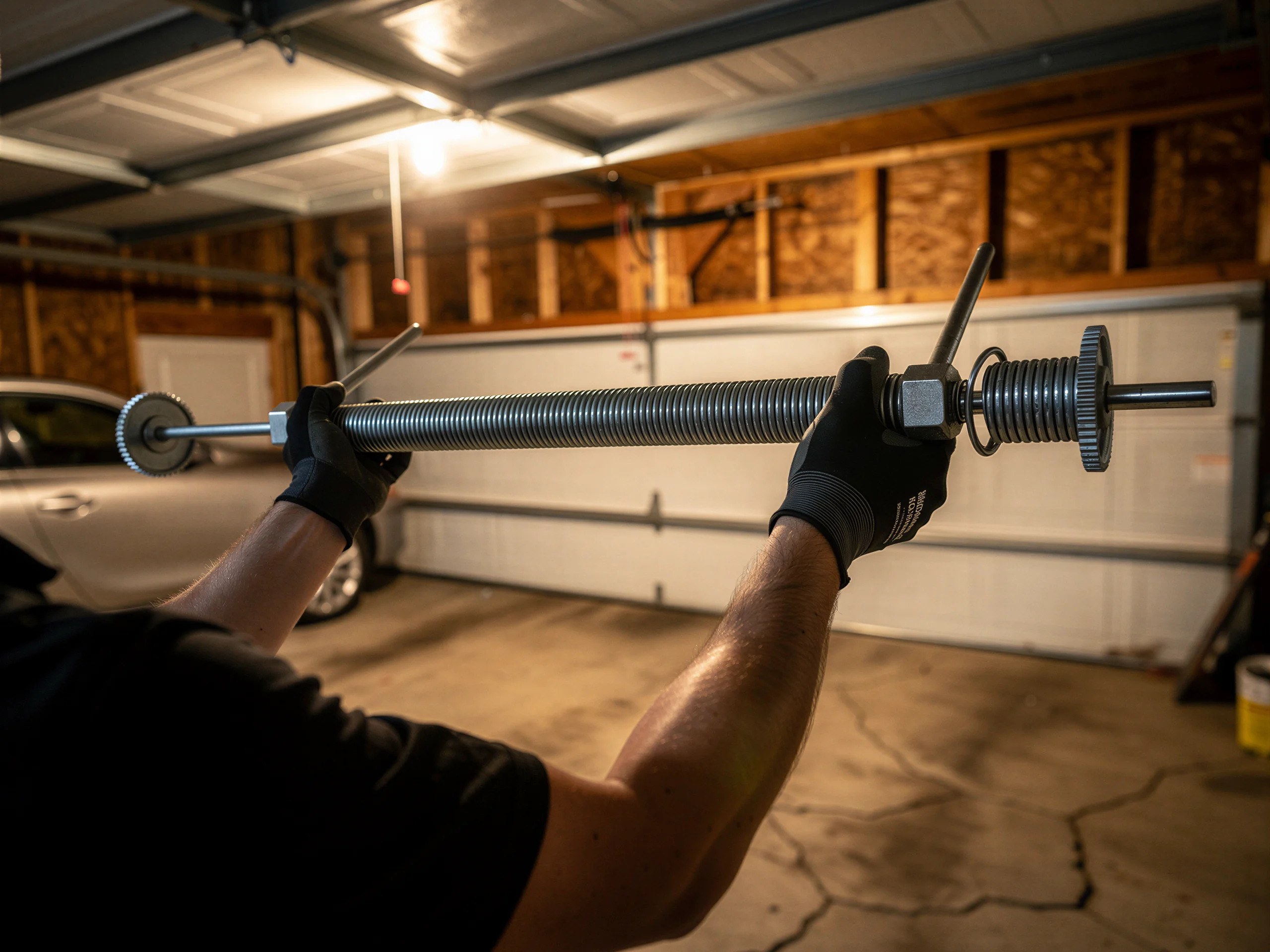
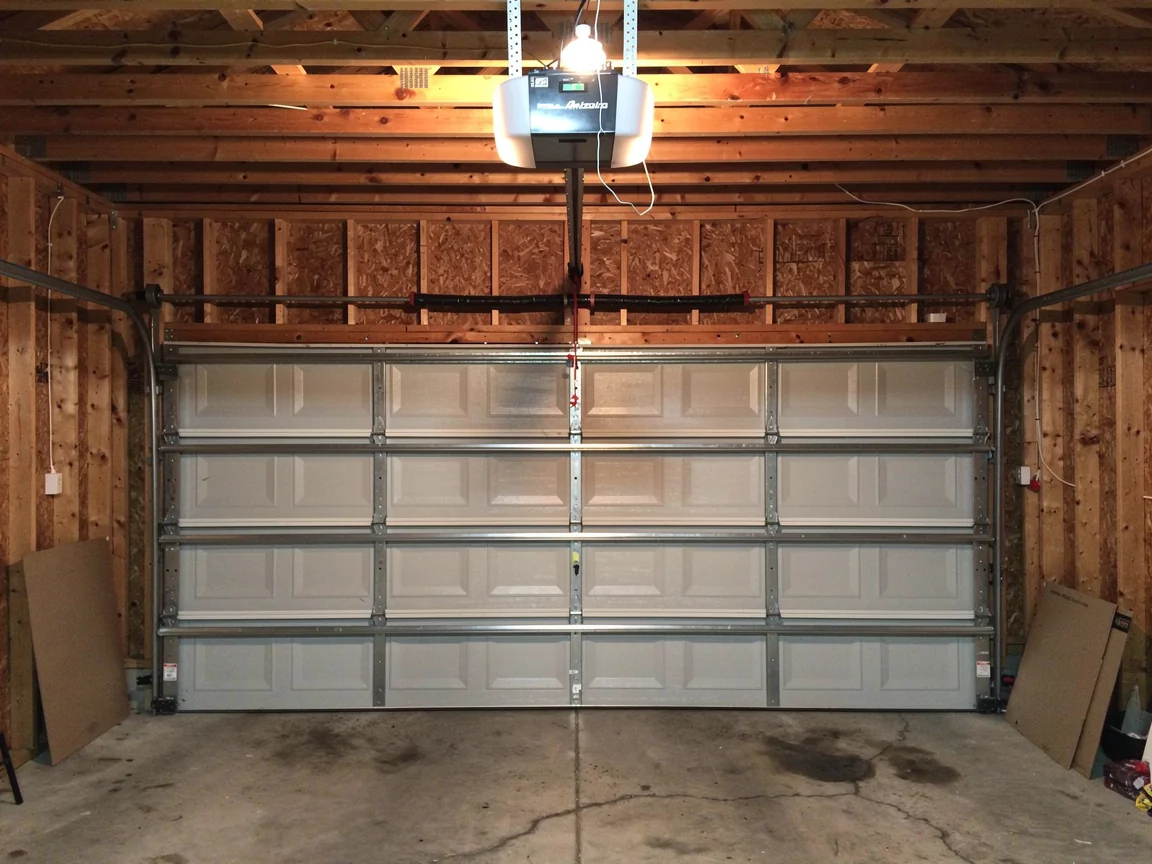
You hear a bang from the garage and now there's a gap in one of the torsion springs over the door. Sometimes it's quieter than that: the door just feels heavier than it used to, the remote works some days and not others, or one corner drags along the track and leaves a scrape mark on the panel.
Recurring neighborhood complaints
In neighborhoods like Cochran's Crossing, Alden Bridge, and Panther Creek, we see a lot of the same handful of complaints repeat house after house, because the houses themselves repeat. A section built in the late 1980s has the same door, same track gauge, and same opener generation as the next one over. When something fails, it tends to fail the same way on the street behind it too.
Grinding noise causes
If your door is making a grinding noise on the way down, that's usually a roller or a bent track section, not the opener. If it's silent but refuses to budge, start with the springs before you call anyone - a seized spring looks identical to a dead opener motor from the driveway.
Why This Fails Locally
Housing across the service area was built mostly between 1971 and 2012, with the median year sitting around 1988. That means a large share of the garage doors and openers in The Woodlands are original or on their second replacement cycle, and torsion springs rated for 10,000 cycles start giving out right around the 15-to-20-year mark regardless of how carefully the door's been used.
In the older sections near Grogan's Mill and Town Center, that late-1980s stock is now three decades past its original hardware, which is long enough for steel springs to fatigue and for the nylon rollers common on that era's doors to crack from UV and heat exposure. The climate here runs moderate on heat, but moderate still means repeated summer stretches that push garage interiors well past 100 degrees - enough to dry out lubricant on tracks and stiffen the rubber seals on door bottoms until they crack.
Newer construction out toward Creekside Park and Sterling Ridge, built later in that same 1971-2012 window, tends to have steel rollers and heavier-gauge springs, so the failure shows up less as spring snap and more as opener logic boards or limit switches drifting out of calibration after years of thermal cycling in a hot garage.
What the Fix Involves
We start by identifying whether the problem is the spring system, the opener, or the track and rollers - three different repairs that often get lumped together as "the garage door is broken.
Matched spring pairs
A broken torsion spring on a double door gets replaced in a matched pair, never one spring alone, because mismatched spring tension puts uneven load on the shaft and the other spring usually isn't far behind.
Opener diagnosis before swap
For openers from the late 1980s and 1990s stock common in this area, we check the circuit board, the drive gear, and the safety sensors before assuming the whole unit needs swapping. A lot of "dead opener" calls turn out to be a stripped gear or a sensor knocked out of alignment, both cheaper fixes than a new unit.
Full roller set replacement
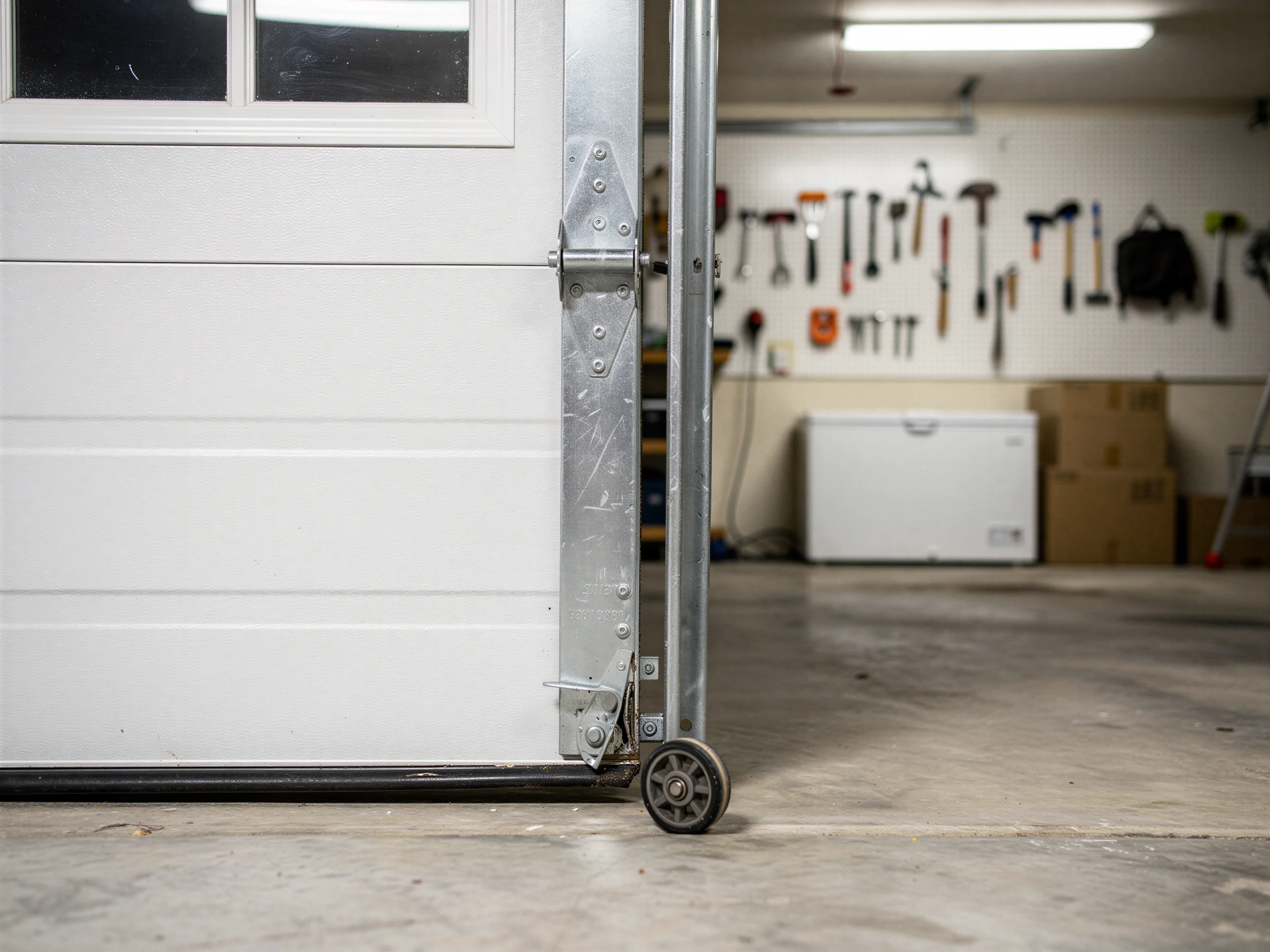
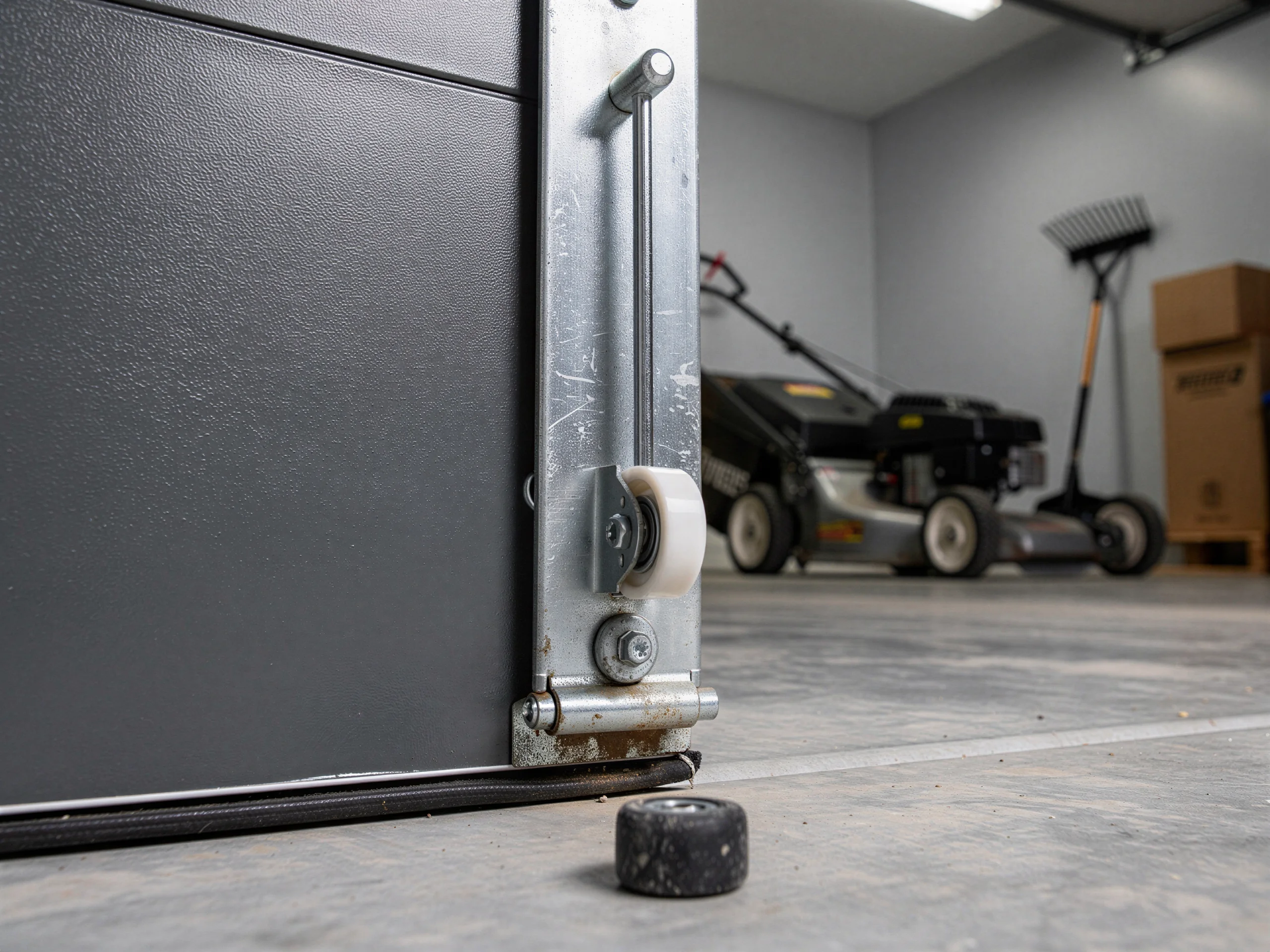
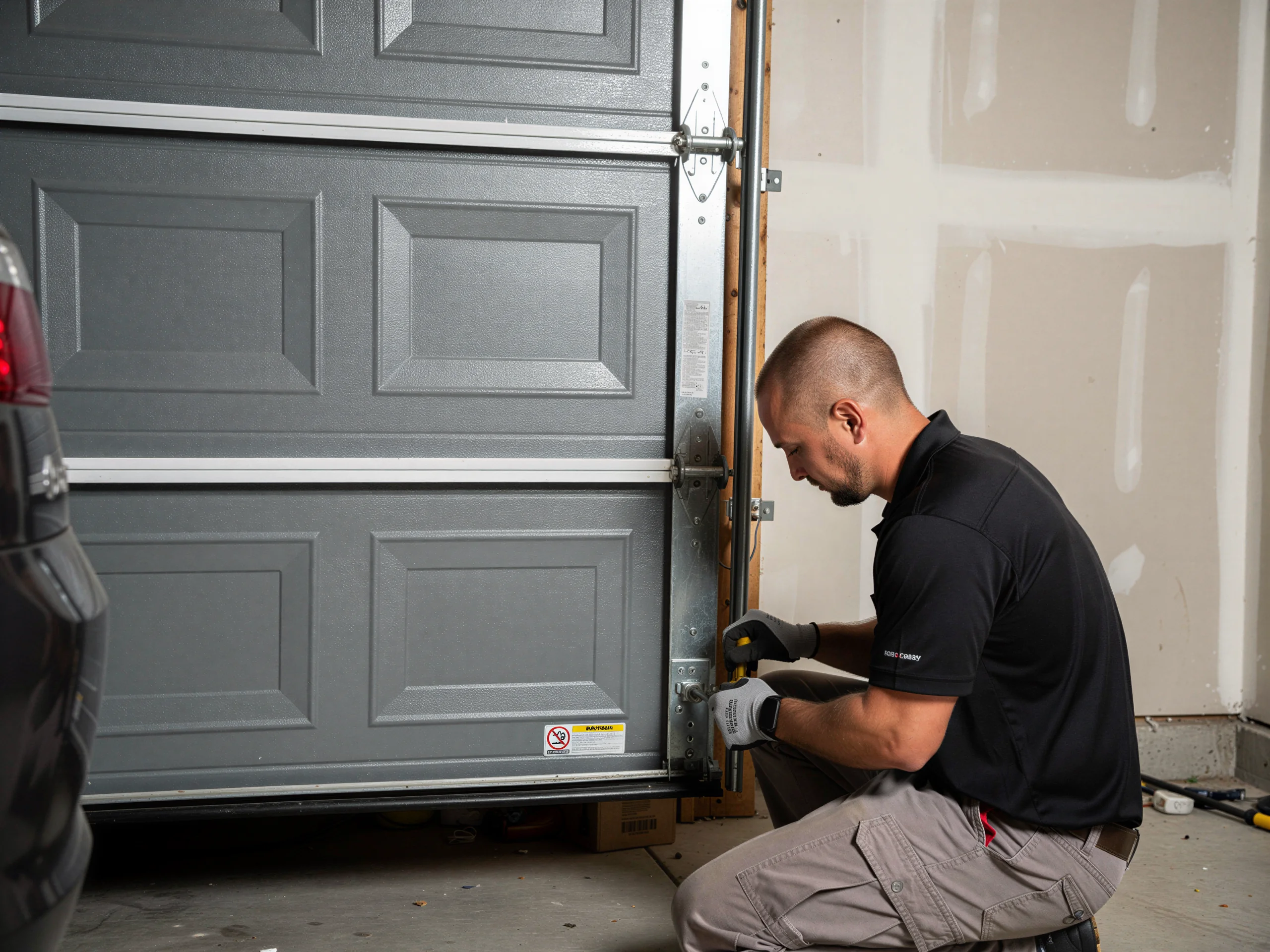
Track and roller work means pulling the door off its hinges, checking the track for bends against a level, and replacing rollers in full sets rather than one at a time, since a mix of old and new rollers on the same track wears unevenly. Cables and bottom seals get inspected during any of this work since they're cheap to replace now and expensive to ignore later.
What Can Go Wrong
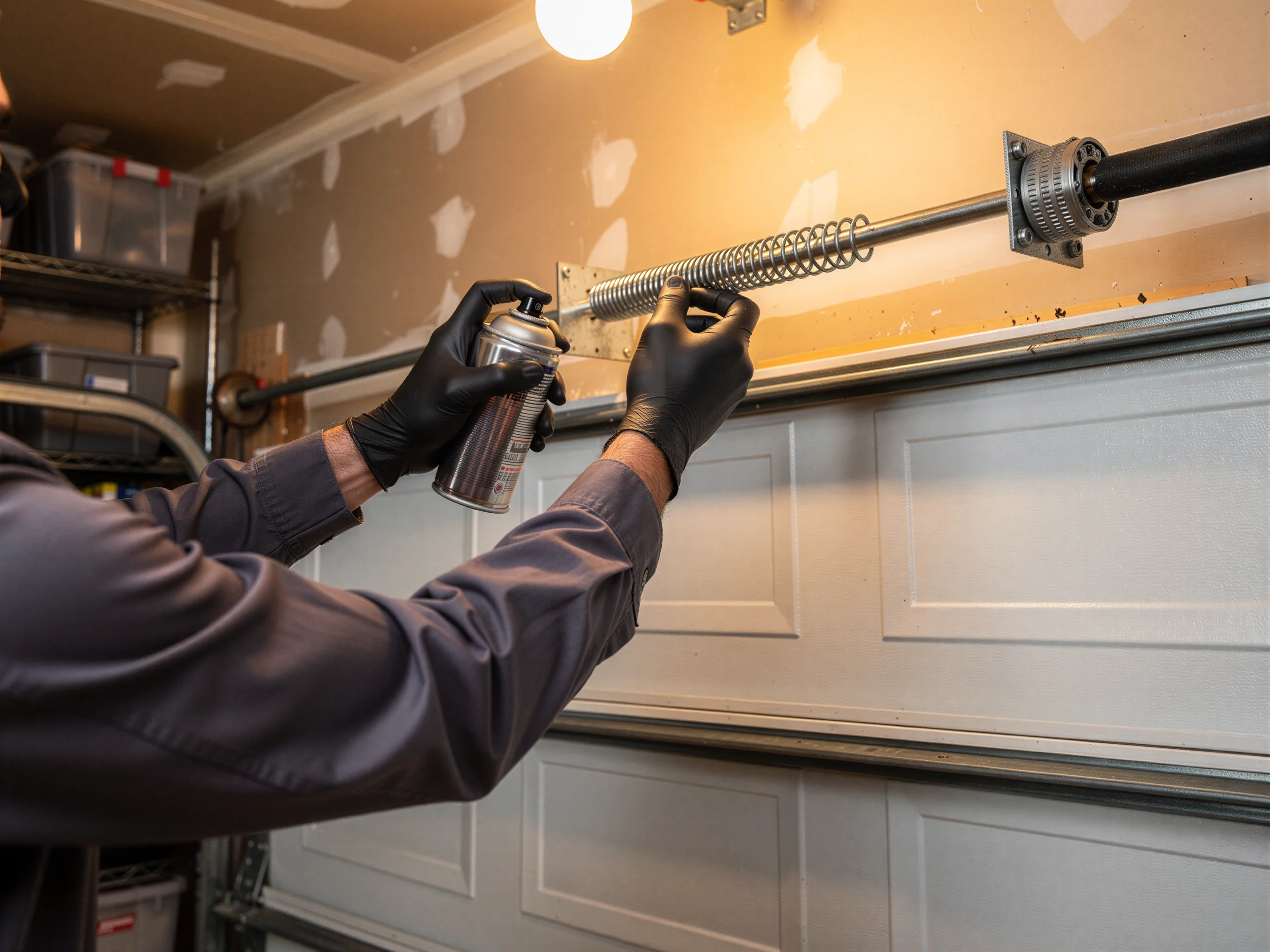
Springs under tension are the one part of this job that genuinely hurts people who try it without the right bars and clamps - we don't recommend DIY spring replacement, full stop.
Snapped cable drop risk
If a cable snaps while a door is up on an old track, the door can drop fast, and on heavier insulated doors that's a lot of weight coming down.
Discontinued opener parts
One limitation worth saying plainly: if an opener model is old enough and the manufacturer has stopped making parts for it, repair isn't always possible, and replacement ends up being the honest answer rather than patching something that'll fail again in six months. We'll tell you straight if that's the situation instead of billing for a repair we don't expect to hold.
Brittle track flange cracks
On older doors, especially ones original to houses from the late 1980s, the panel material itself can be brittle enough that removing a stuck roller cracks the track flange it sits in. That turns a roller swap into a track replacement mid-job, which changes the scope. We'd rather flag that risk before starting than surprise you with it.
Talk to a local pro
Garage door service in The Woodlands?
Same-day service with honest, upfront quotes.