
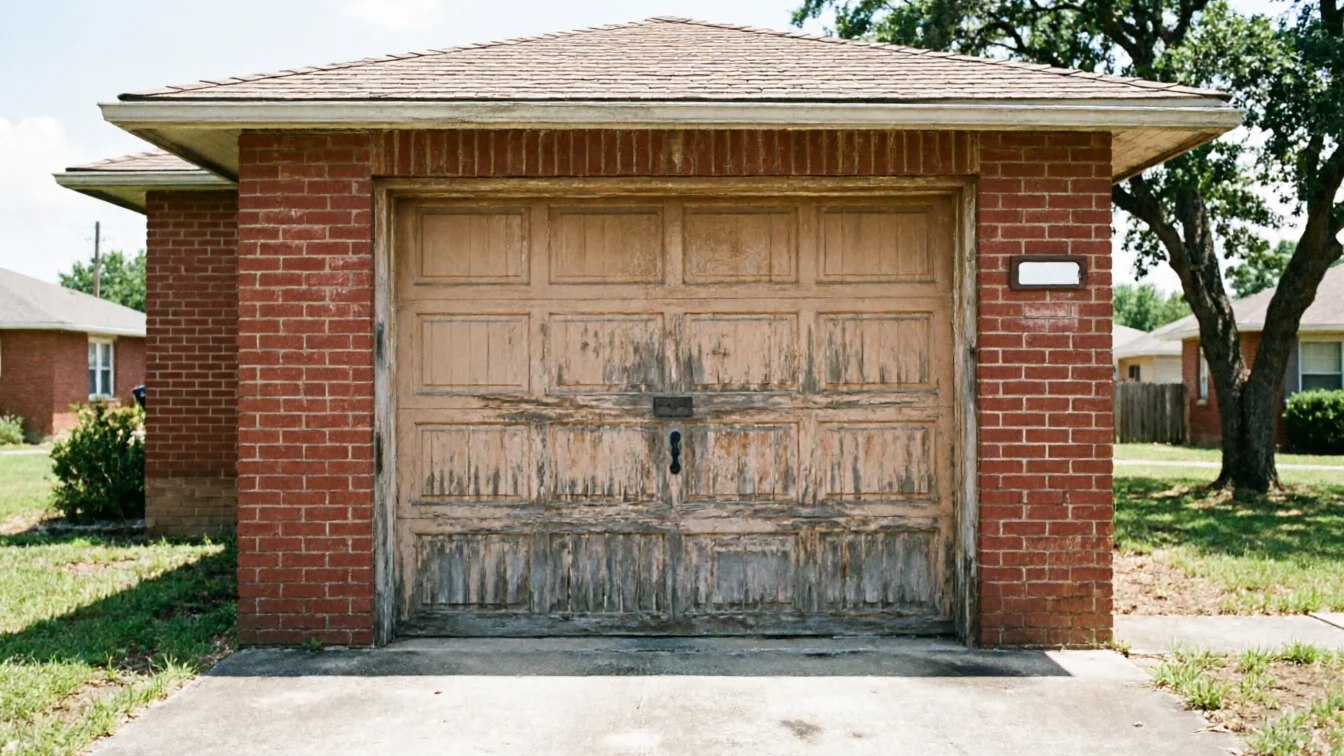
Is Your Garage Door Worth Fixing, or Has It Had Its Run
The Woodlands' housing mostly dates to 1971-2012, median 1988.
Read moreBlogThe Woodlands, TX · 5 min read
In a town built mostly 1971-2012, median 1988, that grinding or popping has a specific cause. Here's how to tell a cheap fix from a part that's done.
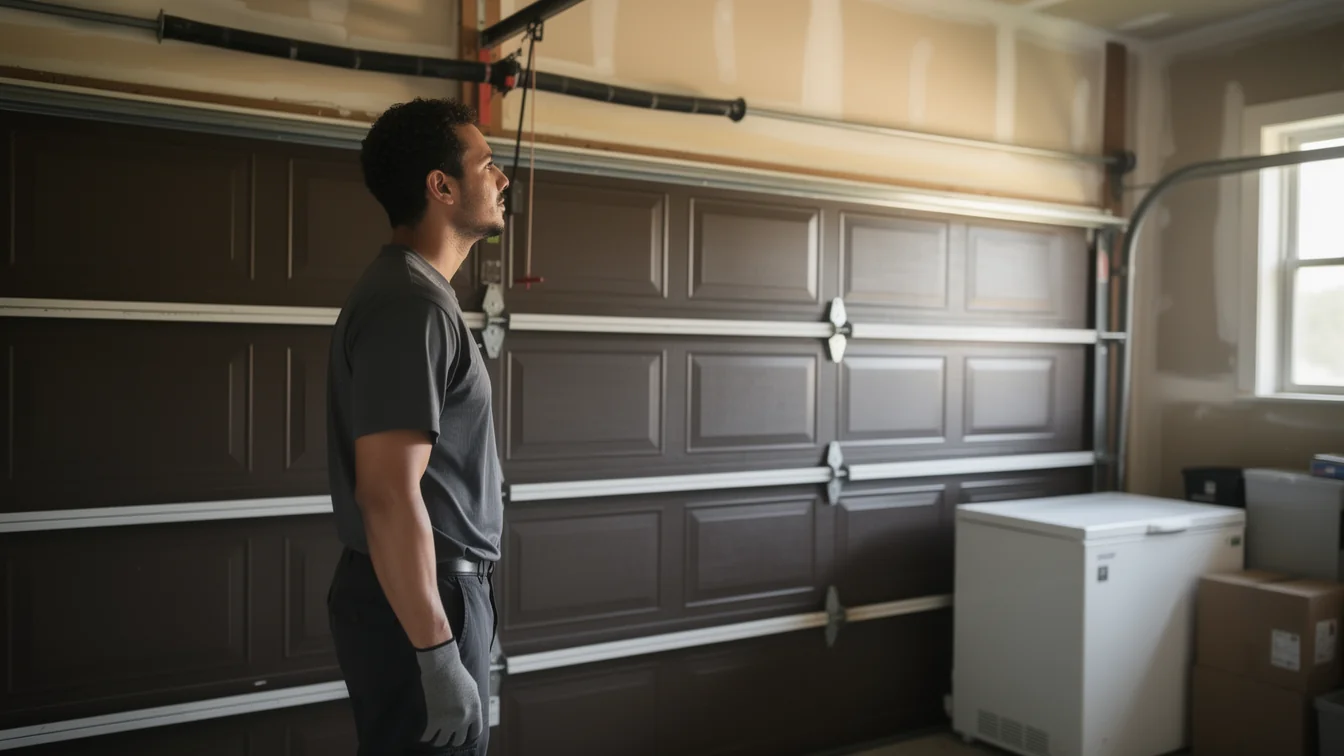
Local detail
You hear it before you see anything wrong. A thud when the door lifts, a metallic pop halfway up, a grind that wasn't there last month. In a town like this, where most houses went up between 1971 and 2012 with the median landing around 1988, the noise usually isn't random. It's the age of the hardware catching up with the door.
A house built in the late 1980s in Cochran's Crossing or Alden Bridge is pushing close to forty years on its original torsion spring if nobody's swapped it. Rollers that shipped with a 1990s build in Sterling Ridge or the Village of Grogan's Mill have seen tens of thousands of cycles. The noise is the hardware telling you where it is in its life, not a mystery.
We can't tell you what your door is doing without hearing it. But we can tell you that in a service area where the housing stock clusters so tightly around one era, the same three or four causes show up over and over: dry rollers, a spring losing tension, a bent track, or an opener gear set that's worn past quiet operation. None of those get better on their own.
The area
Before you call anyone, stand in the garage and run the door up and down once, slow, and listen for where the sound happens, not just that it happens.
A squeal at the rollers, every few inches, usually means dry nylon rollers - common on doors from the 1980s-90s builds that make up most of this area's stock, since those rollers were rarely the sealed-bearing kind. A loud bang partway through the cycle is often a cable or spring losing its grip, and that one you stop and call about, you don't keep testing it.
A rhythmic knock as the door travels can be a bent track or a damaged panel section, more common on older one-piece and sectional doors from the earlier end of that 1971-2012 range. A grinding hum from the motor head itself, especially on a house that's never had the opener replaced, points to a gear set wearing out - openers from original builds in this price range typically don't make it 35+ years without that part failing.
Write down where in the cycle you hear it. That one detail saves a diagnostic visit.
What we find
This area sits in a moderate-heat climate band, not the deep extremes you'd get further west or further north, but the heat still does something specific to a door's moving parts. Lubricant on rollers and hinges breaks down faster in sustained heat than it does in a cooler climate, and metal components expand slightly on the hottest days, which is often when a borderline-worn part finally announces itself with a noise instead of staying quiet.
That means a door that's been fine all year can start grinding or popping in the hottest stretch, not because anything failed overnight, but because the heat pushed a part that was already near the end of its life past the point where it could hide it. If your door got noisy on a 95-degree afternoon and was silent in milder weather, that's not a coincidence - it's a part telling you it had maybe one season left either way.
We don't push a seasonal tune-up for its own sake. If the door's quiet and operating smoothly, leave it alone. But a noise that shows up with the heat and doesn't go away with cooler weather is worth a look before it becomes a stuck door on the one day you actually need to get the car out.
How we work
Moderate heat, year-round humidity swings, and a housing stock that's mostly thirty to fifty years old - that combination is specific to this part of the state, and it shapes which noises you hear and when.
Steel springs and cables don't like sustained heat exposure over decades. They lose a little tension every cycle, and in a hot garage that process runs faster than it would somewhere cooler. A spring installed when a Town Center or Research Forest house was built in the late 1980s has had thirty-plus years of that slow heat fatigue, and the popping or banging noise you hear now is often the last stage of that fatigue, not the first.
Humidity plays a smaller role but it's there - it works on bare metal track and hardware that's lost its coating over the years, and a little surface corrosion on a track rail will squeal long before it causes a real jam.
Here's the honest limit: we can diagnose a noise over the phone well enough to tell you if it's urgent, but we can't tell you the exact part without seeing the door. And if a spring's original to a house built in the 1980s, replacement is almost always the right call over trying to nurse it along - that's not an upsell, it's just where that part is in its life by now.
Questions
That's usually a cable or spring shifting under load, and it's one of the more serious noises you can hear. It doesn't mean the door is about to fail this second, but a bang like that means a component is under uneven tension. Get it looked at before the next cycle, not after it happens again.
Heat breaks down roller and hinge lubricant faster than cooler weather does, and it's common in this climate band for a marginal part to go quiet most of the year and then squeal once sustained heat hits. If it was silent all winter and started this summer, the part was likely already near the end of its life.
Likely, yes. Most openers from that era weren't built to run quietly past 30-plus years of cycles, and a grinding or humming motor noise at that age usually means the internal gear set is worn. It's worth having it checked rather than waiting for it to stop working mid-cycle.
No. Most noise comes from rollers, lubrication, or a spring - all repairable parts, not reasons to replace the whole door. Full replacement only makes sense when the panels themselves are damaged or the door is old enough that parts are hard to source. Don't let a noise alone talk you into a bigger job than you need.
Recommendation
More garage door guides for The Woodlands homeowners.
The Woodlands' housing mostly dates to 1971-2012, median 1988.
Read more
Most houses here date to the 1971-2012 build window, many from the 80s and 90s.
Read more
Most Woodlands garages were built 1971-2012, and that range decides whether a power cut leaves your door stuck shut or easy to release by hand.
Read moreReady when you are
The Woodlands Garage Door Pros repairs and installs garage doors, springs and openers in The Woodlands, TX and the surrounding area.