What You Are Seeing
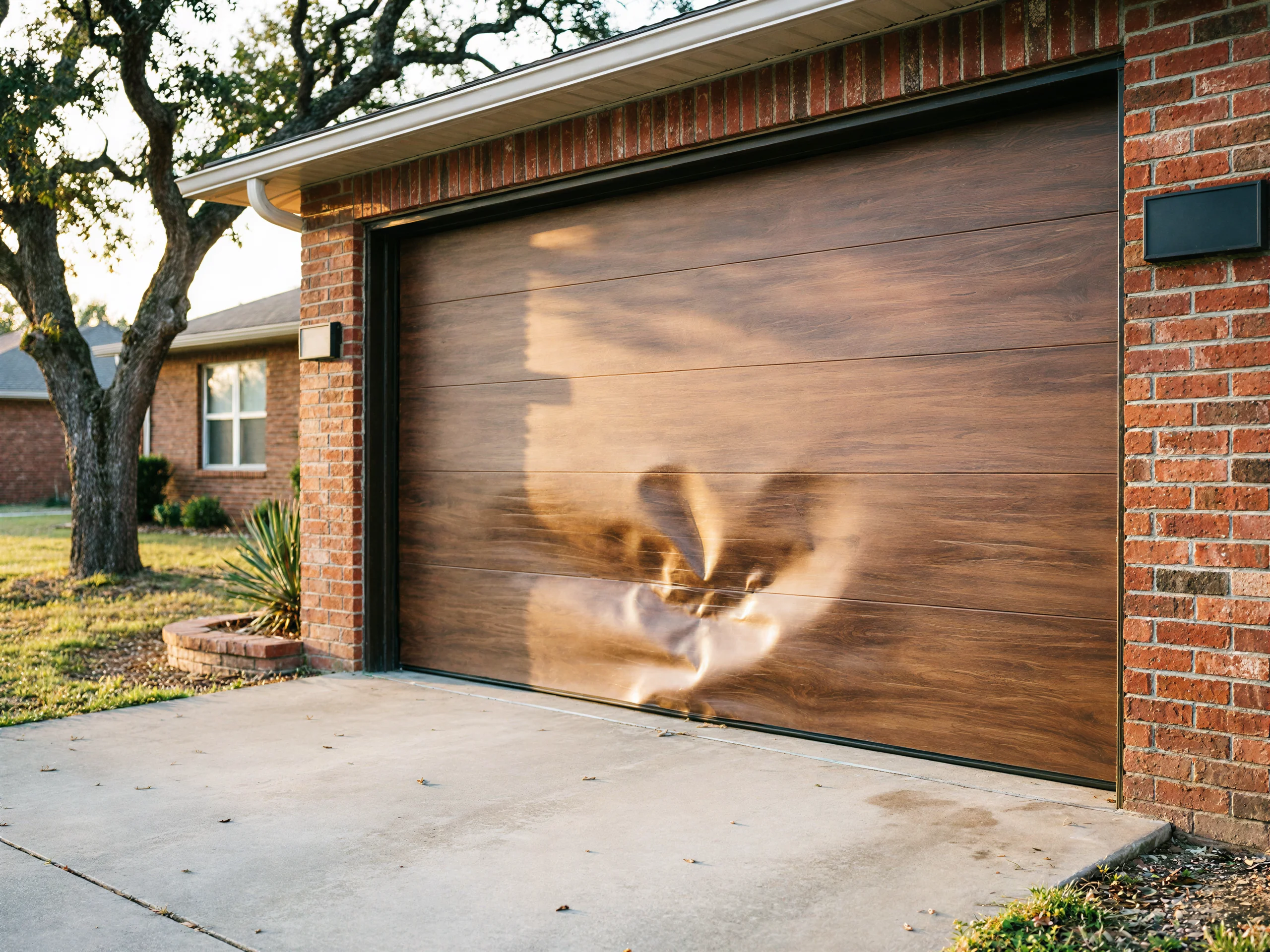
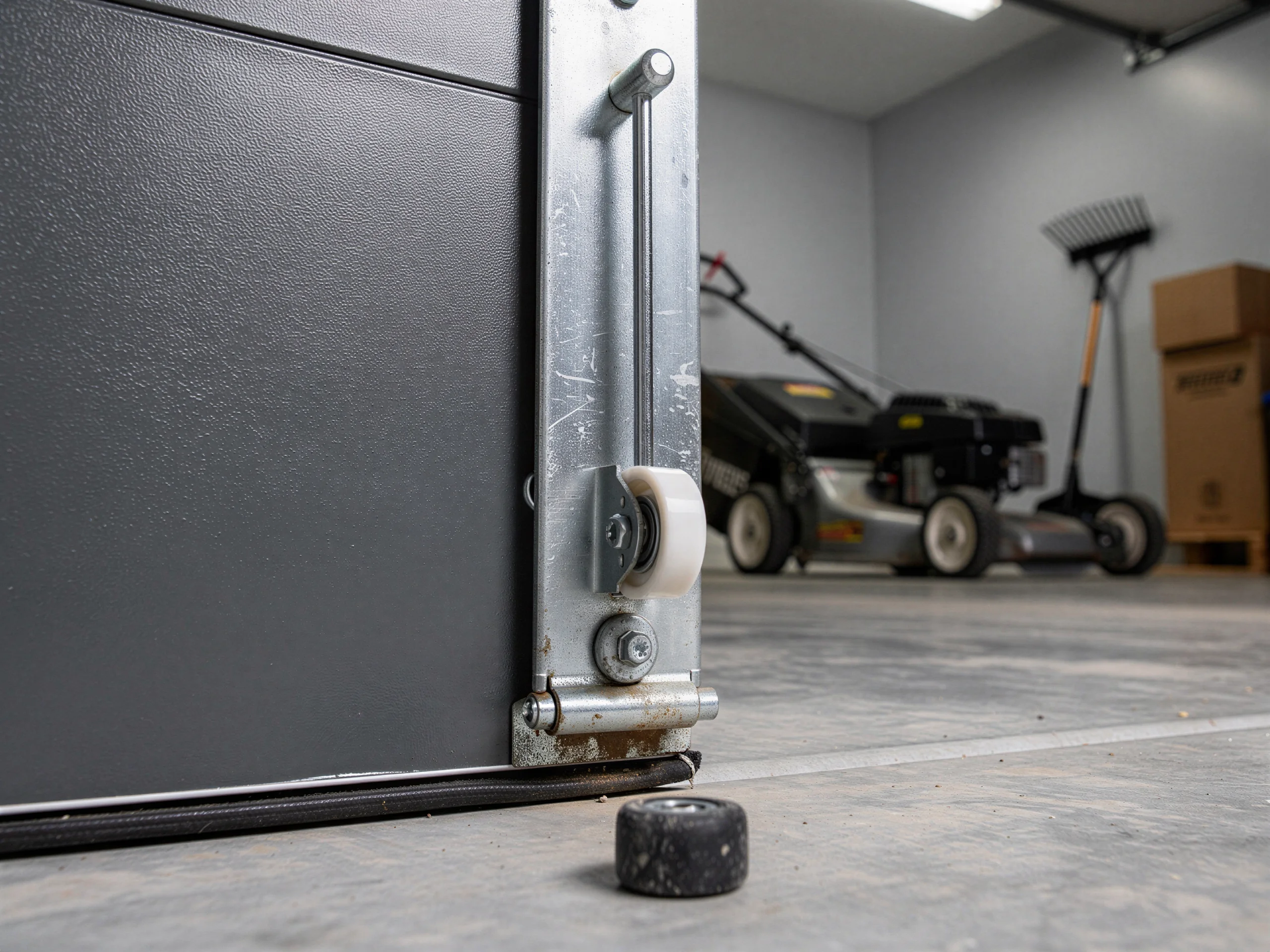
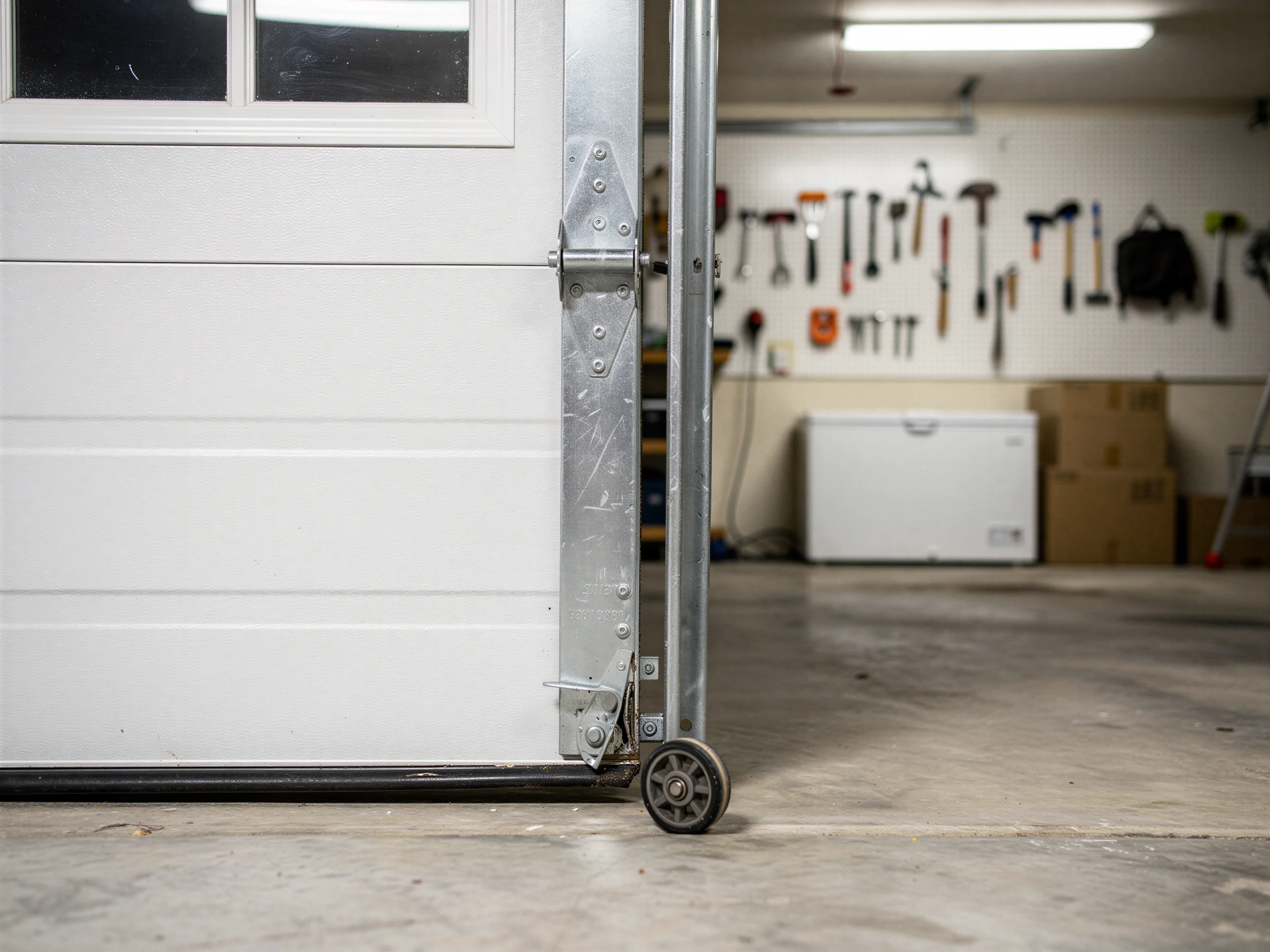
The door looks crooked in the opening, or one corner hangs lower than the other. Sometimes it's stuck halfway, rollers visible outside the track instead of inside it.
Roller popping loose
You might hear a bang before it happens - a roller popping loose, or a hinge pulling away from the track bracket. The opener may still hum like it's trying to work, or it may have already quit and reversed itself. This is different from a door that just won't open.
Daylight between roller and track
An off-track door has physically left the channel that guides it up and down, which means the whole panel can shift, bind, or come down unevenly. If you can see daylight between the roller and the track, or the door sits at an angle instead of flat against the frame, that's what you're looking at.
Common older-home track calls
Across The Woodlands, this is one of the more common calls we get on doors from homes built in the 1980s and 90s, where the original track hardware is still in place and has had three or four decades of cycles to loosen up. Don't keep pressing the opener button once you notice this. Running the motor against a door that's left its track usually bends the track further, strips the opener's drive gear, or pulls the whole assembly off the jamb.
Why This Fails Locally
Most of the housing stock in this service area went up between 1971 and 2012, with the bulk of it clustered in the 1980s and 90s - tract-built doors on steel tracks bolted to wood jambs that have moved slightly with the house over the years. In neighborhoods like Panther Creek, Cochran's Crossing, and Alden Bridge, that's three-plus decades of garage doors opening and closing on brackets that were never meant to be adjusted after install.
The climate here sits in a moderate heat band, which matters more than people expect. Garage temperatures swing through the day, and that constant expansion and contraction works on the track bolts and the wood behind them. Over years, lag screws back out a sixteenth of an inch at a time. A bracket that's even slightly loose lets the track flex sideways under load, and a flexing track is a track a roller can jump. Add a slammed door, a bumped car mirror, or a broken cable yanking the panel off balance, and that marginal bracket is where the door comes off.
This isn't a defect unique to one subdivision - it shows up anywhere in the service area with original 80s/90s track hardware still in service. Newer builds post-2000 tend to hold up longer simply because the hardware hasn't had as many cycles yet.
What the Fix Involves
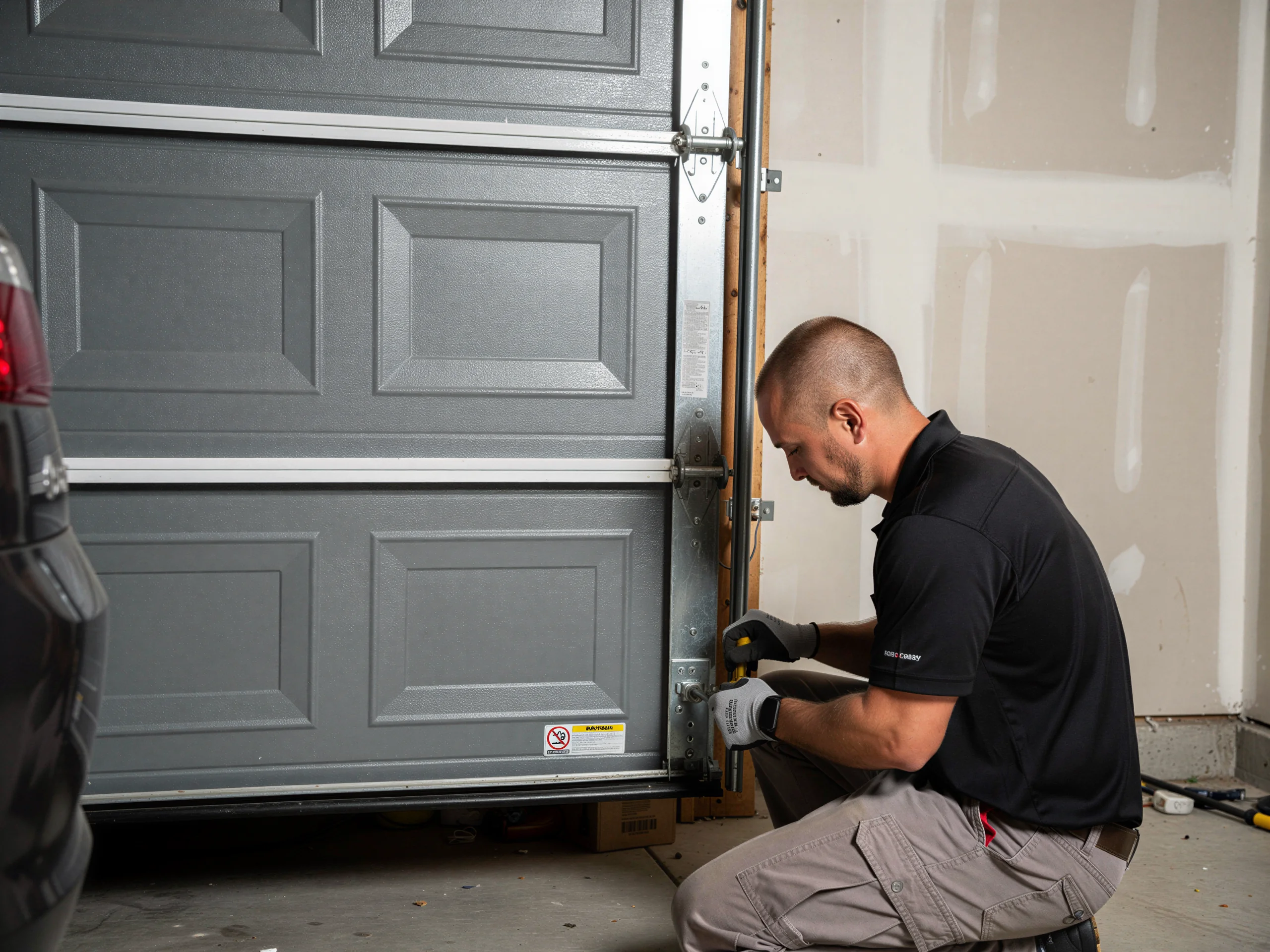
First step is figuring out why it came off, not just putting it back on. We check the track brackets for loose or stripped lag screws, check the track itself for bends or kinks, and check the rollers for wear - a worn roller is narrower than a new one and can walk right out of a track that's otherwise fine.
Checking cables and brackets
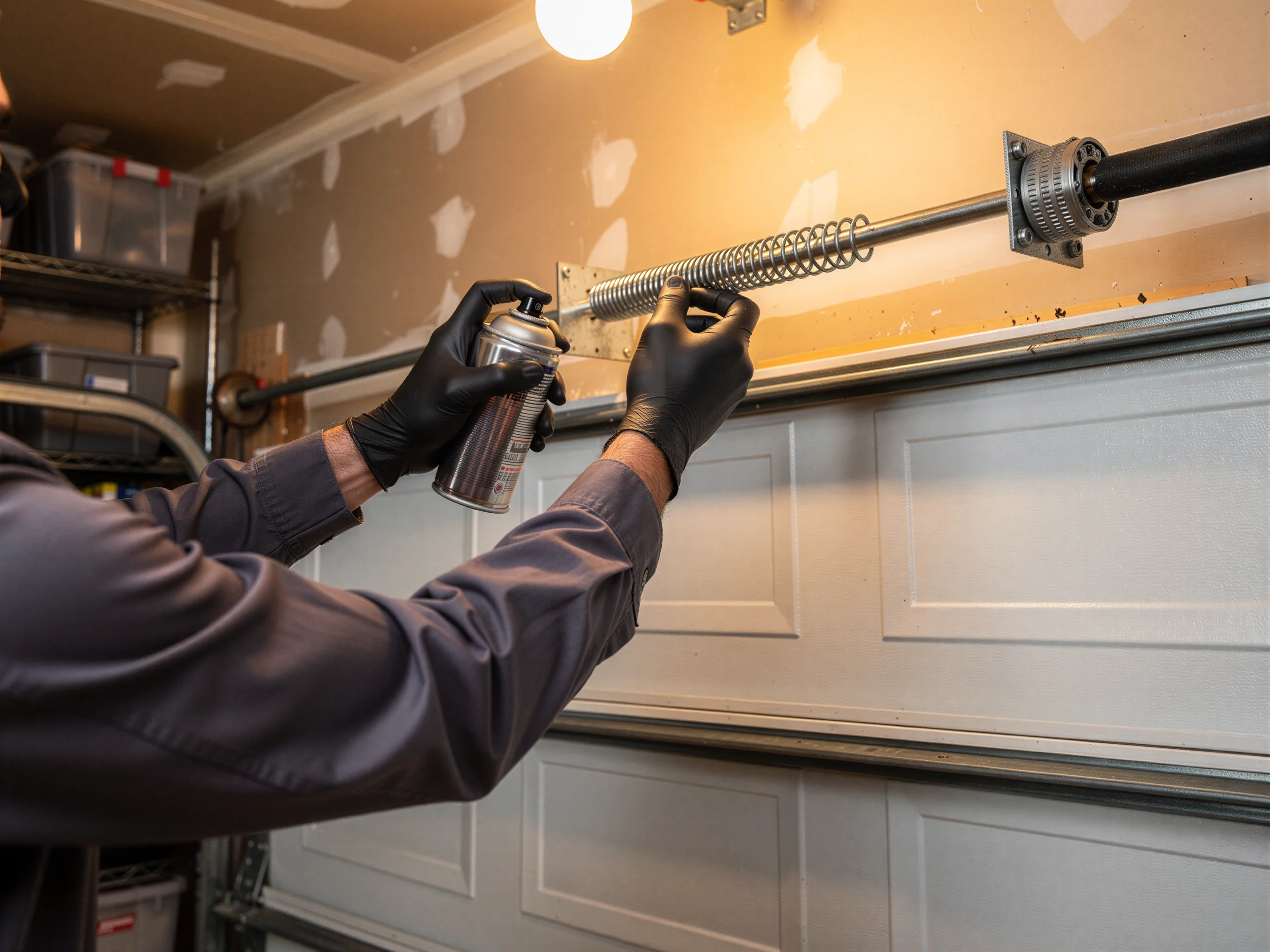
We also check the cables and the bottom brackets, since a snapped cable is a common reason a door jumps track in the first place. If the track is just bent or the brackets are loose, we can usually re-seat the door, straighten or replace the damaged section, and re-anchor the brackets into solid wood.
Full track replacement
That's typically a same-visit fix. If the track is bent badly enough that it won't hold a true line anymore, or if it's bent on both sides, full track replacement is the honest call rather than fighting a track that'll pop again in six months.
Opener limit resetting
We also check the opener's travel limits and force settings afterward, since a door that's been running crooked for a while often needs those re-set so it doesn't slam or reverse unexpectedly once it's back on track.
What Can Go Wrong
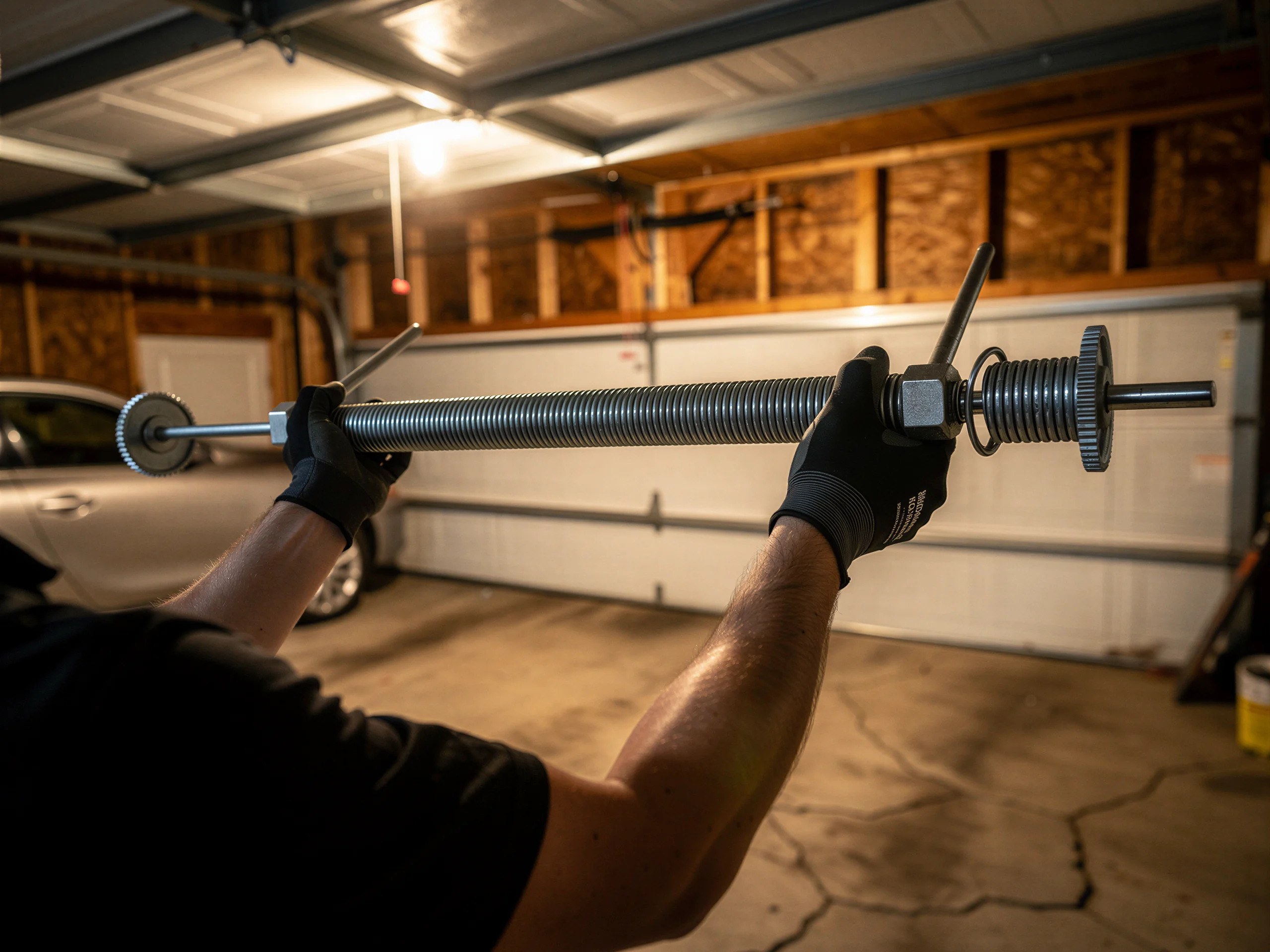
The biggest risk is trying to force the door back into the track yourself. A garage door section weighs more than people expect, and one off its track with tension still in the spring system can shift suddenly.
Repeatedly straightened track
We don't recommend DIY re-seating on anything with a torsion spring still under load. On the repair side, the honest limitation: if a track has been bent and straightened more than once already, straightening it again is a short-term patch.
Fatigued track limits
Steel fatigues, and a track that's been worked back into shape twice usually won't hold a third time - at that point replacement is the better use of your money, even though it costs more up front than another bend-and-bolt fix.
Hidden underlying damage
We also won't quote a fix over the phone sight unseen, because an off-track door sometimes points to a bigger issue underneath - a broken spring, a cracked bottom bracket, or a jamb that's shifted and needs more than a track adjustment. Diagnosing it on site is the only way to know which repair actually solves the problem instead of just getting the door back in the opening for a few more weeks.
Talk to a local pro
Garage door service in The Woodlands?
Same-day service with honest, upfront quotes.