What You Are Seeing
If your door is slow to open, the opener hums without moving the door, or the springs look stretched and discolored, you're probably dealing with original or first-replacement hardware.
Local housing age
Housing in this service area went up mostly between 1971 and 2012, with the bulk of it dating to the 1980s and 90s across neighborhoods like Cochran's Crossing, Alden Bridge, Sterling Ridge, and Panther Creek.
Aging openers and springs
That means a lot of garages still run openers and torsion springs that are thirty-plus years old, or replacements from the first round of upgrades in the 2000s.
Subtle warning signs
You might also notice the door reversing on its own, cables fraying near the bottom bracket, or a panel that sags slightly at one corner. None of these show up overnight - they're the slow result of components doing their job for decades in a hot, humid climate they weren't rebuilt for.
Why This Fails Locally
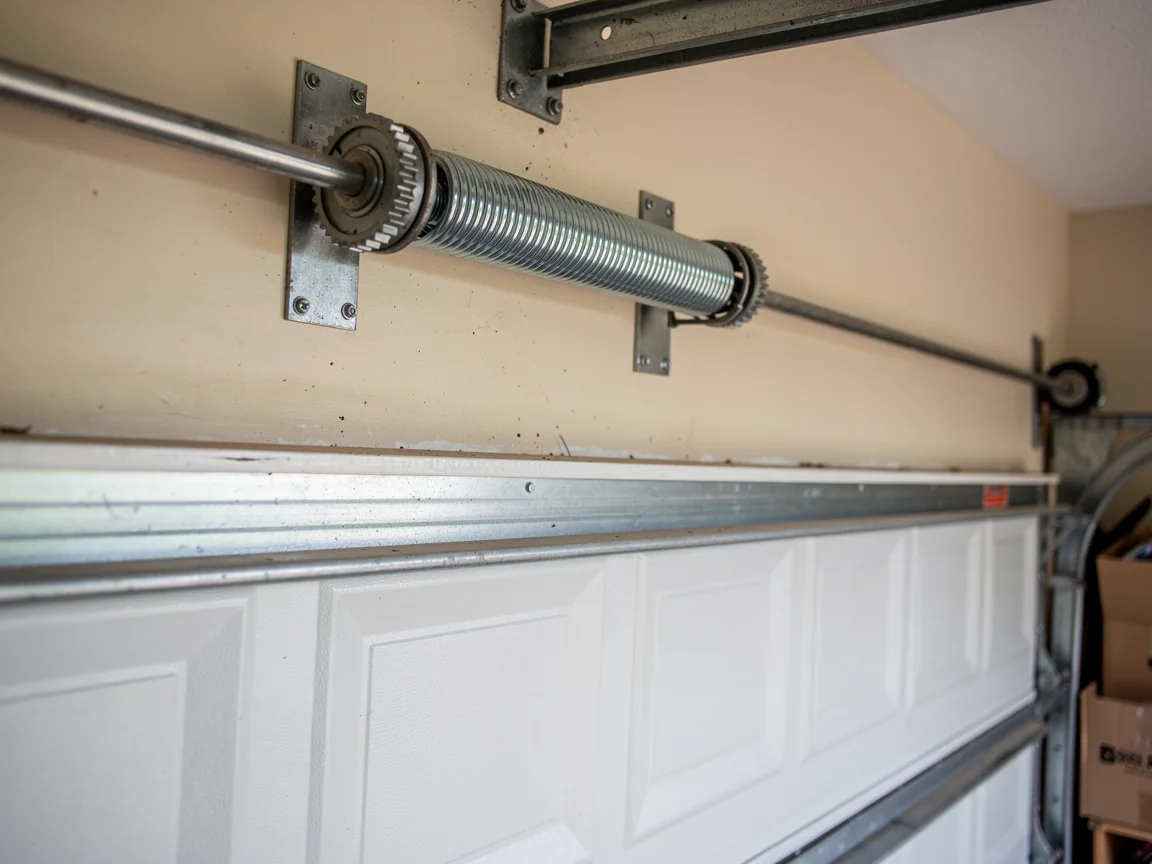
The Woodlands sits in a moderate-heat climate band, and that matters more than people think. Heat cycles dry out factory lubricant on springs and rollers faster than in cooler regions, and nylon rollers common in 80s and 90s builds get brittle sooner when garages run hot through long stretches of the year. Add in original galvanized torsion springs rated for a fixed number of cycles, and a door that's opened multiple times a day for thirty-plus years is well past its expected service life. This isn't a defect - it's just math. A spring rated for 10,000 cycles and used eight times a day has been through that count years ago. Homes in Research Forest, Creekside Park, and Town Center built in that same window are hitting this same wall now, which is why service calls for failing springs and tired openers cluster in exactly this age of housing.
What the Fix Involves
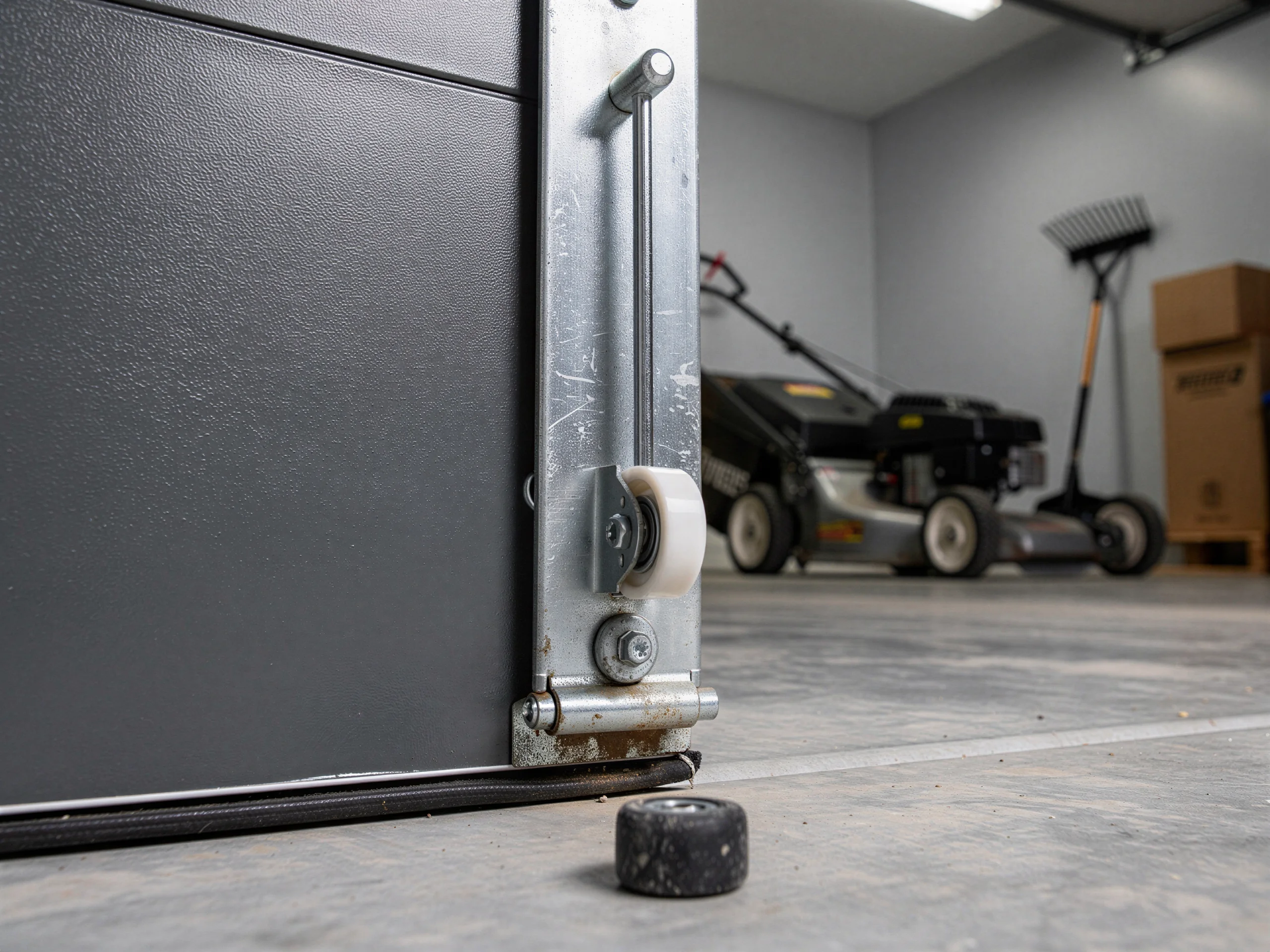
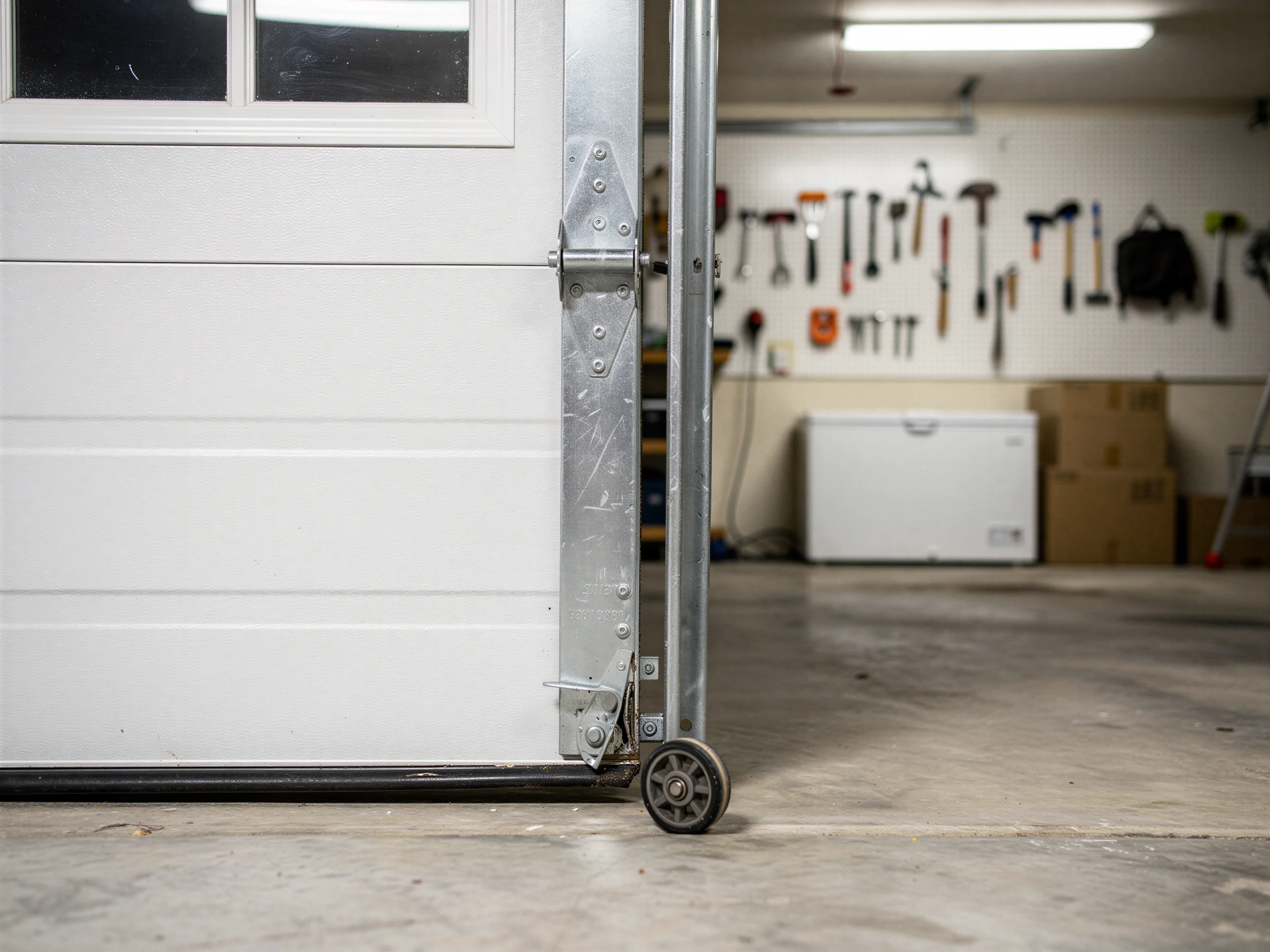
Service starts with identifying what's actually original versus what's already been swapped. On a 1980s-90s door, that often means replacing torsion springs matched to the door weight, swapping brittle nylon rollers for steel ball-bearing ones, and checking whether the opener's drive gear has worn down from decades of use.
Cable, track, and lubrication checks
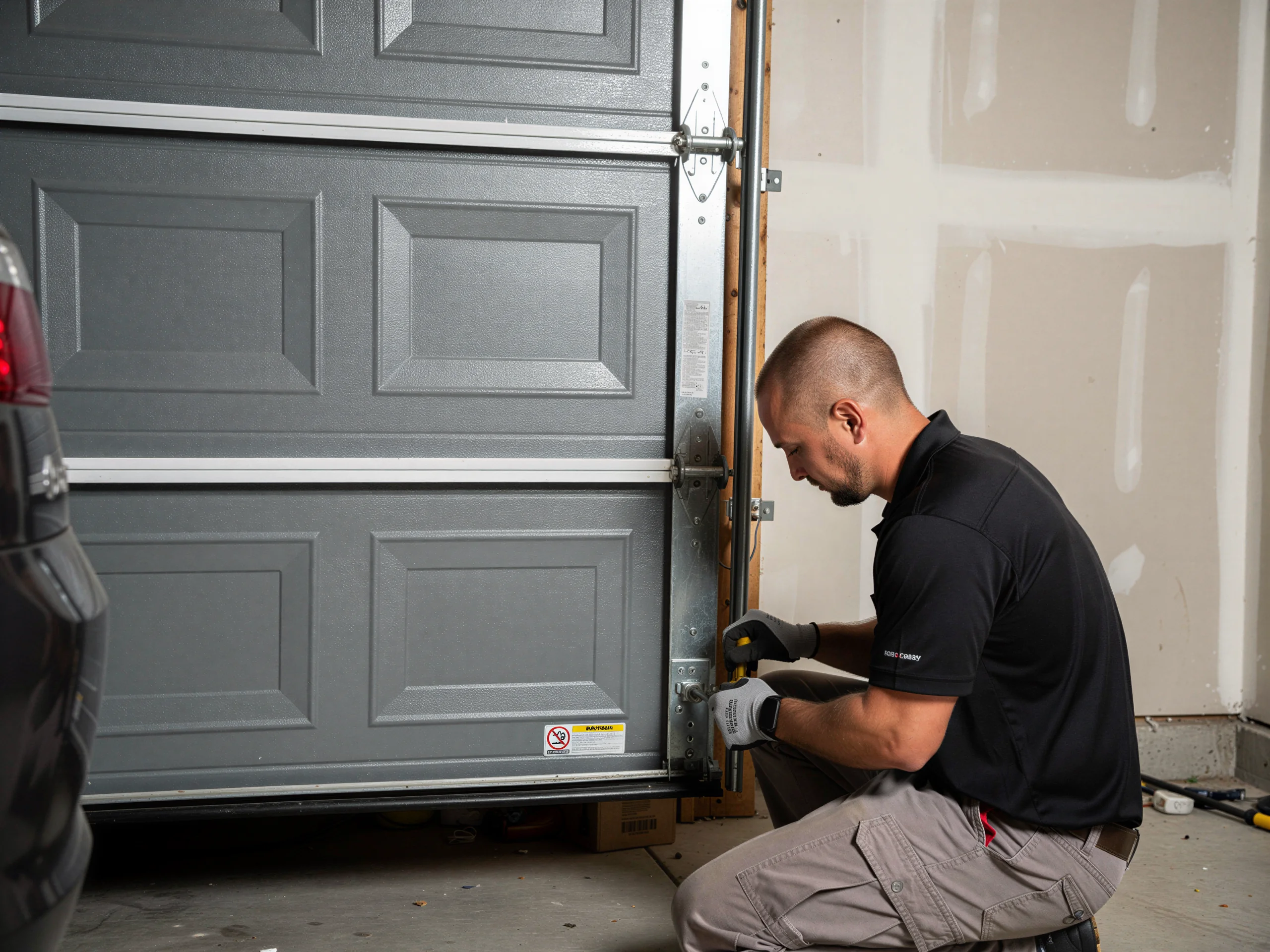
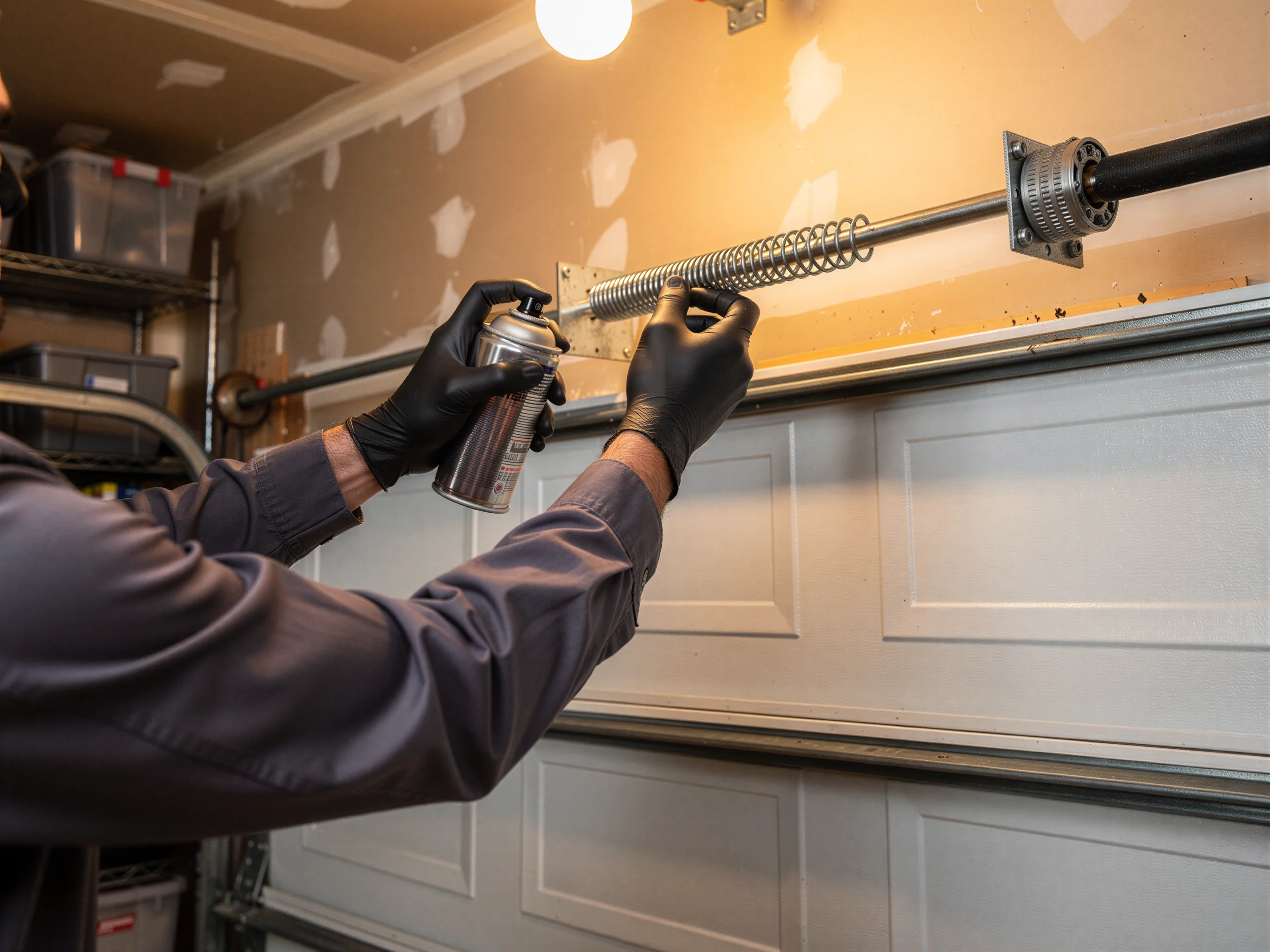
We check cable fray at the bottom brackets and track alignment, since houses settle over that many years and tracks can shift out of true. Lubrication gets redone properly - not just the springs, but hinges and the opener's chain or screw drive.
Opener safety reversal standards
If the opener itself predates modern safety reversal standards, that's worth a conversation, since replacement can matter more than repair at that point. One limitation worth saying plainly: if the door panels themselves are warped or rusted through, spring and opener work won't fix that, and we'll tell you honestly when panel or full door replacement makes more sense than another repair.
What Can Go Wrong
A torsion spring under tension is not a DIY fix - it's the single most dangerous part of this job, and it's why original 1980s hardware that's never been serviced is the most common emergency call we get. Worn rollers left too long can jump the track, which then bends the track itself and turns a cheap roller swap into a track replacement. An opener with a stripped gear will keep trying to lift the door and can burn out the motor entirely, not just the gear. And on older installs, bottom brackets holding the cables can be under-rated for the door's current weight if panels were ever replaced without updating the hardware. None of these are reasons to panic - they're reasons to get the door looked at before a slow problem becomes a door that won't open at all, or one that comes down hard.
Talk to a local pro
Garage door service in The Woodlands?
Same-day service with honest, upfront quotes.