What the Fix Involves
Houses here went up around 1971, a good seventeen years ahead of the 1988 median for the rest of our service area. That gap matters more than it sounds.
Thermal cycling wear
A door and opener installed in 1971 has been through decades more thermal cycling, more open-close counts, and more than one owner's worth of "good enough" fixes. Maintenance on a house like that isn't the same job as maintenance on a 1995 build in Research Forest or Sterling Ridge.
Full-travel maintenance checks
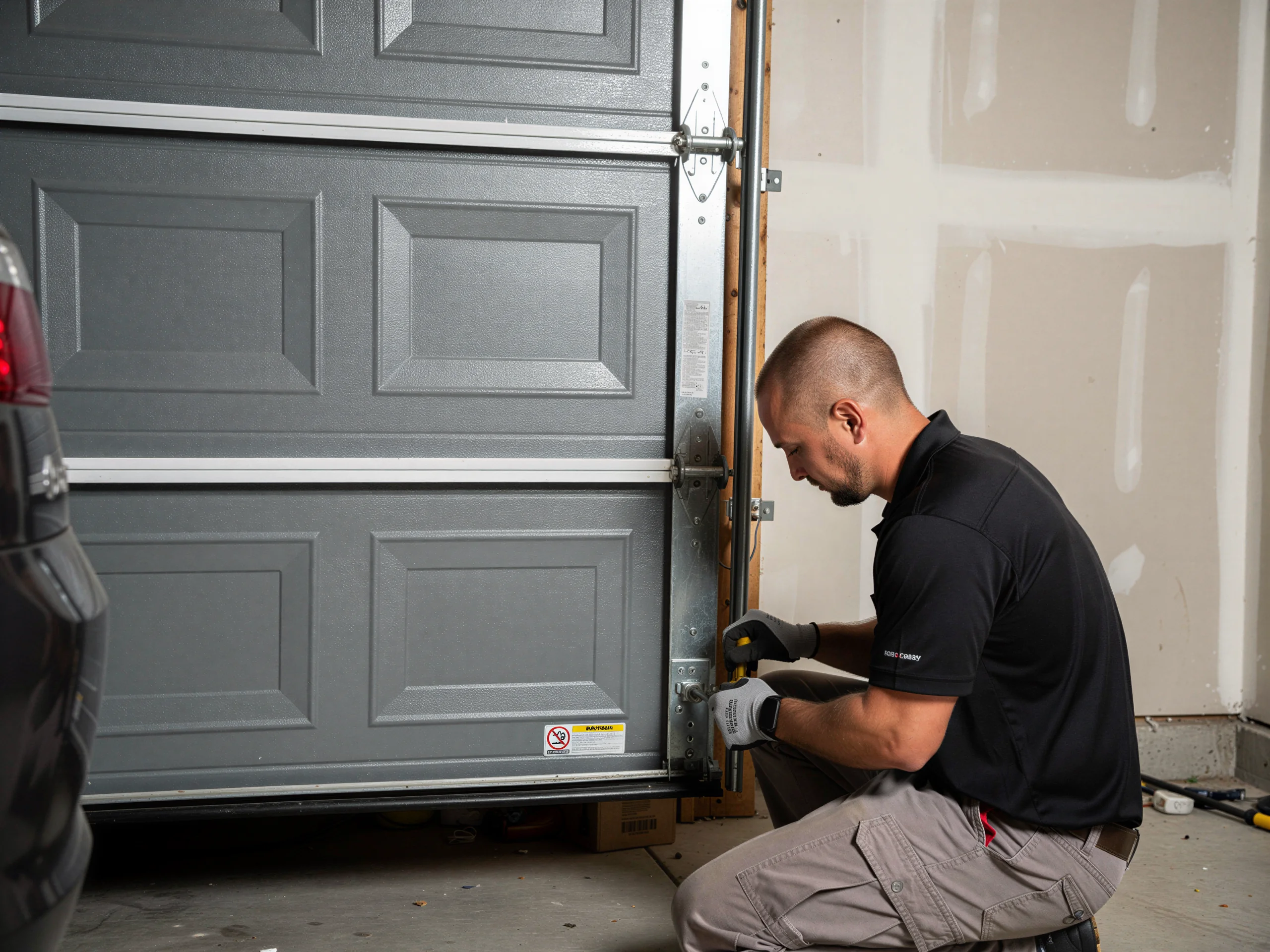
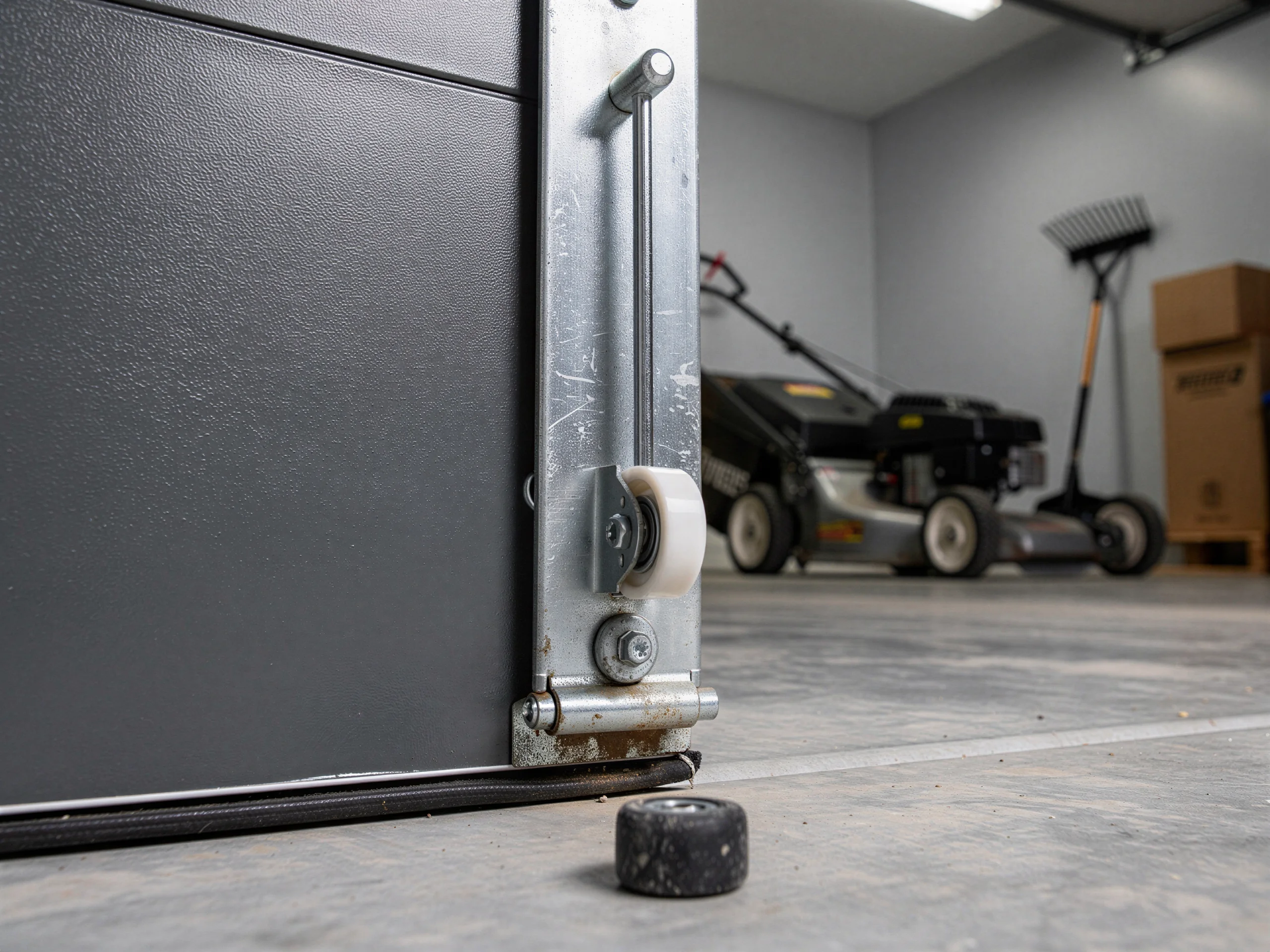
A real maintenance visit covers the full travel of the door: track alignment, roller condition, cable fray, hinge wear, and spring tension measured against the door's actual weight, not a guess. We check the opener's force settings and reversal safety, since those drift over years of use.
Header bracket bolts
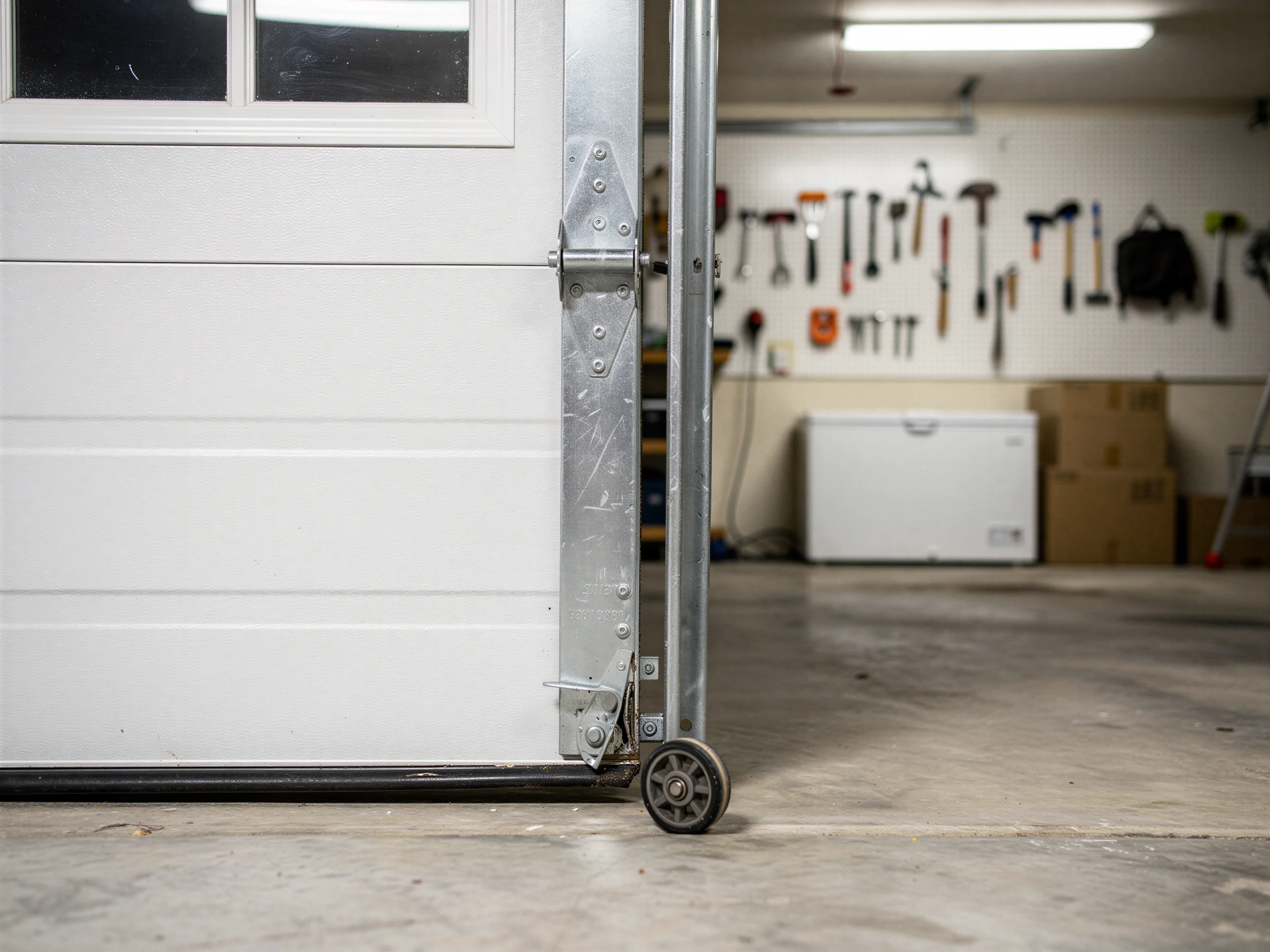
On an older door we spend more time on the track brackets and the header bracket bolts, since those are the points that loosen first on original hardware that's never been touched. We're not selling you a new door on this visit. If the springs and rollers are sound, the job is lubrication, adjustment, and a tension check, not a replacement pitch. If something is past adjusting, we'll tell you plainly instead of running the clock.
What Is on the Truck
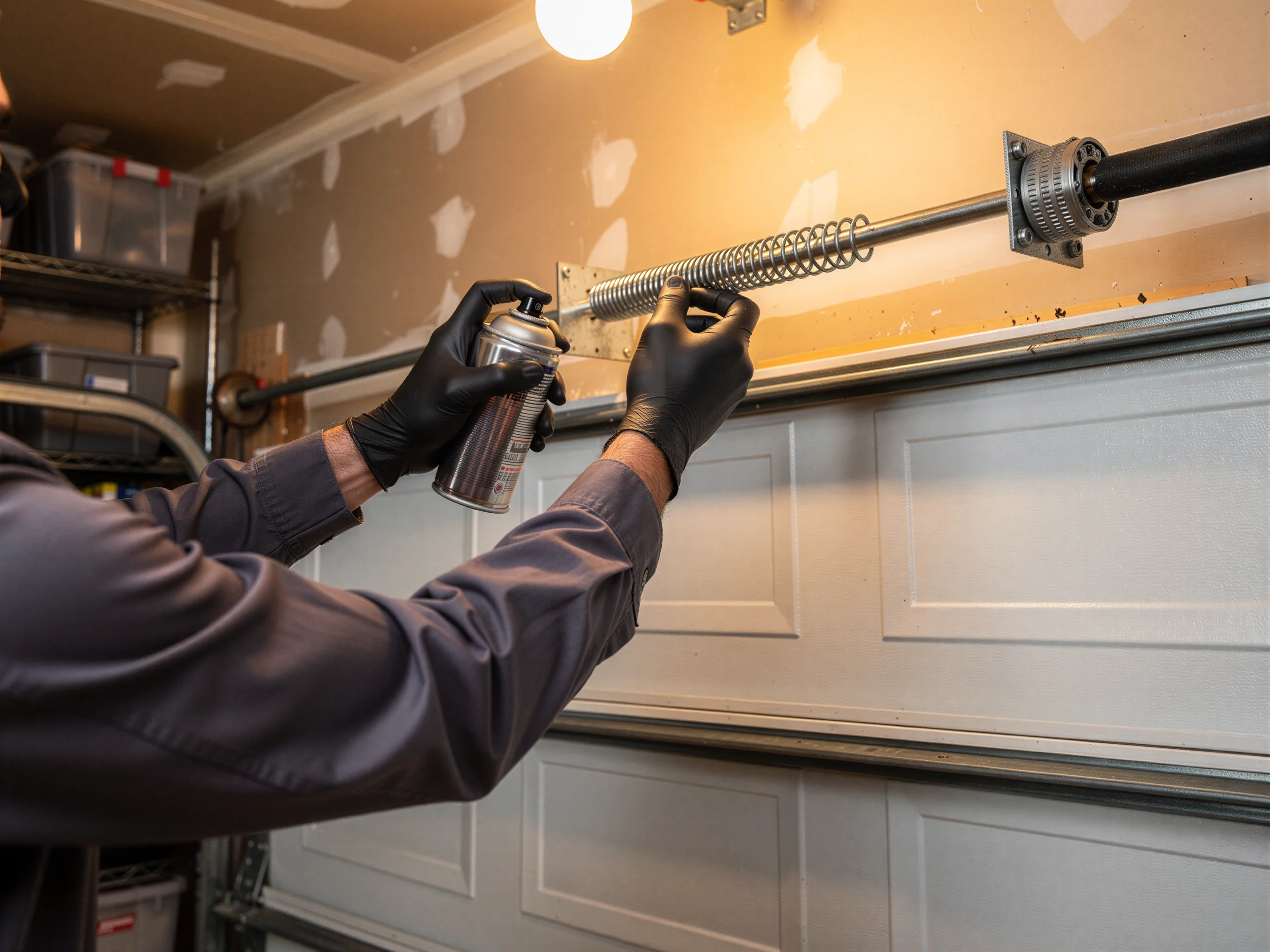
The climate here runs on the moderate end of the heat band for this region, so the lubricant we carry is a silicone-based grease rated for sustained heat rather than a cold-weather formula.
Old dried grease
That matters on a 1971-era door, because original hardware was often packed with a grease that's long since dried out or gummed up under years of Texas summers. Beyond lube, the truck carries standard-gauge rollers, replacement hinges, cable, and the common torsion spring sizes that fit residential doors from this build era through the newer stock.
Proprietary opener parts
We don't stock every manufacturer's proprietary opener part, so if your opener is an older or less common model, a part may need to be ordered rather than installed on the spot. That's the one honest limit on a maintenance visit: we can diagnose and often fix on the first trip, but a rare part means a second one.
Balance-test and meter tools
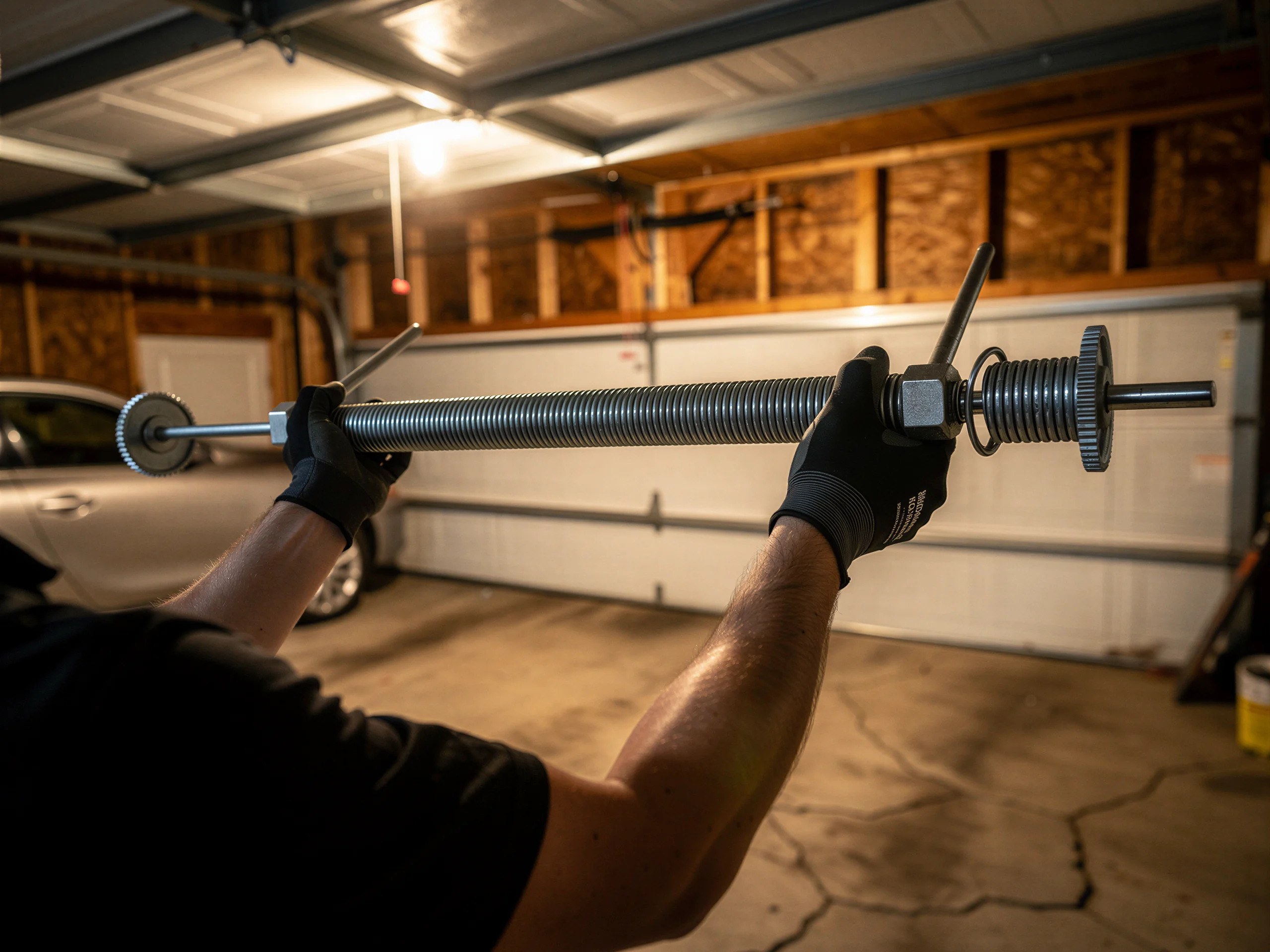
We also carry a basic balance-test setup, torque wrenches sized for residential spring winding, and a multimeter for opener circuit checks. None of that is exotic. What matters is matching the right-weight spring and the right lube to a door that's older than most of what we service closer to The Woodlands.
How to Book
Aldine sits roughly 20 miles from our shop in The Woodlands, which means visits here get scheduled into the route rather than offered as a same-day walk-in. We don't keep a depot or crew stationed in Aldine, so booking ahead gets you a tighter window than calling on the day you notice a problem.
Start at our Aldine area page to see what we cover out this way, or check the main maintenance page for The Woodlands if you want the full rundown of what a maintenance visit includes across the service area. From there it's a straightforward call to get a date on the schedule.
Because we're traveling in rather than based locally, we ask that someone be home to walk through the door's history with us: roughly when it was installed, whether it's been serviced before, and whether the opener has ever been swapped out. On a house this age, that history tells us more than a quick visual check would.
What Can Go Wrong
On a door built when the neighborhood went up in 1971, the most common failure we see is a torsion spring that's simply reached the end of its cycle count.
Cycle-driven spring failure
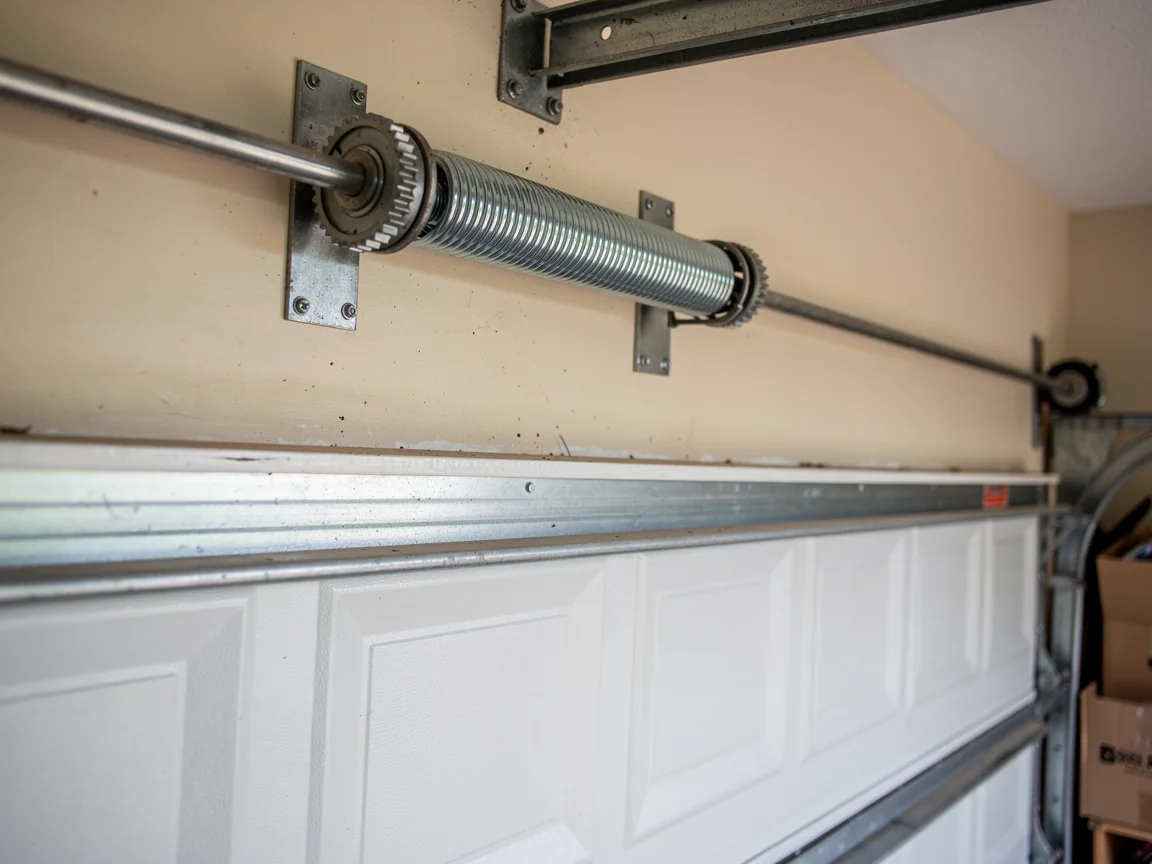
Springs don't fail on a calendar; they fail on use, and fifty-plus years of daily cycling on original hardware is a lot of cycles even for a well-made spring. Rust is the other recurring issue. Heat and humidity work on exposed springs and unlubricated cables over that many years, and a cable that looks fine from a few feet away can be frayed at the drum where you can't see it.
Undersized original brackets
We've also found original brackets that were never rated for the heavier insulated doors that got installed as replacements somewhere along the way, a mismatch that shows up as a door that's noticeably harder to lift by hand than it should be.
Hardware past safe adjustment
We won't try to resurrect hardware that's past safe adjustment just to avoid a bigger conversation. Rewinding a spring that's already stretched past spec, or shimming a bracket that's cracked, is a short-term patch that puts the door back on our schedule sooner, not later.
Why This Fails Locally
The median household income here is $40,916, well under the $74,424 median across the rest of the area we cover, and that gap shows up directly in how doors get maintained. A $200 maintenance visit is an easier call to make when a household's budget has more room in it; when it doesn't, maintenance gets deferred until the door stops working, which almost always costs more than the visit would have.
With 4,196 households in Aldine against roughly 18,369 across our full service area, this is a smaller slice of our route, but the deferred-maintenance pattern is consistent and predictable. A door that's never been serviced since a 1971 build doesn't fail gently. It fails as a seized spring, a snapped cable, or an opener straining against resistance it was never built to fight, usually on a day when getting it fixed matters.
We'd rather catch the wear during a scheduled visit than get the emergency call after the spring lets go. That's the honest pitch for maintenance here: it's cheaper up front and it's cheaper over the life of a door that's already outlasted its original hardware's expected service life.
What You Are Seeing
If your door is louder than it used to be, or the opener strains and hums before the door moves, that's usually original hardware telling you its age.
Grinding and squealing rollers
On a house from this era, a grinding or squealing sound at the rollers is common, especially if the door has never had a lube service. A door that closes crooked, or one side that drops faster than the other, points to uneven spring tension, which is common on older torsion setups that have never been rebalanced.
Heavy-feeling door by hand
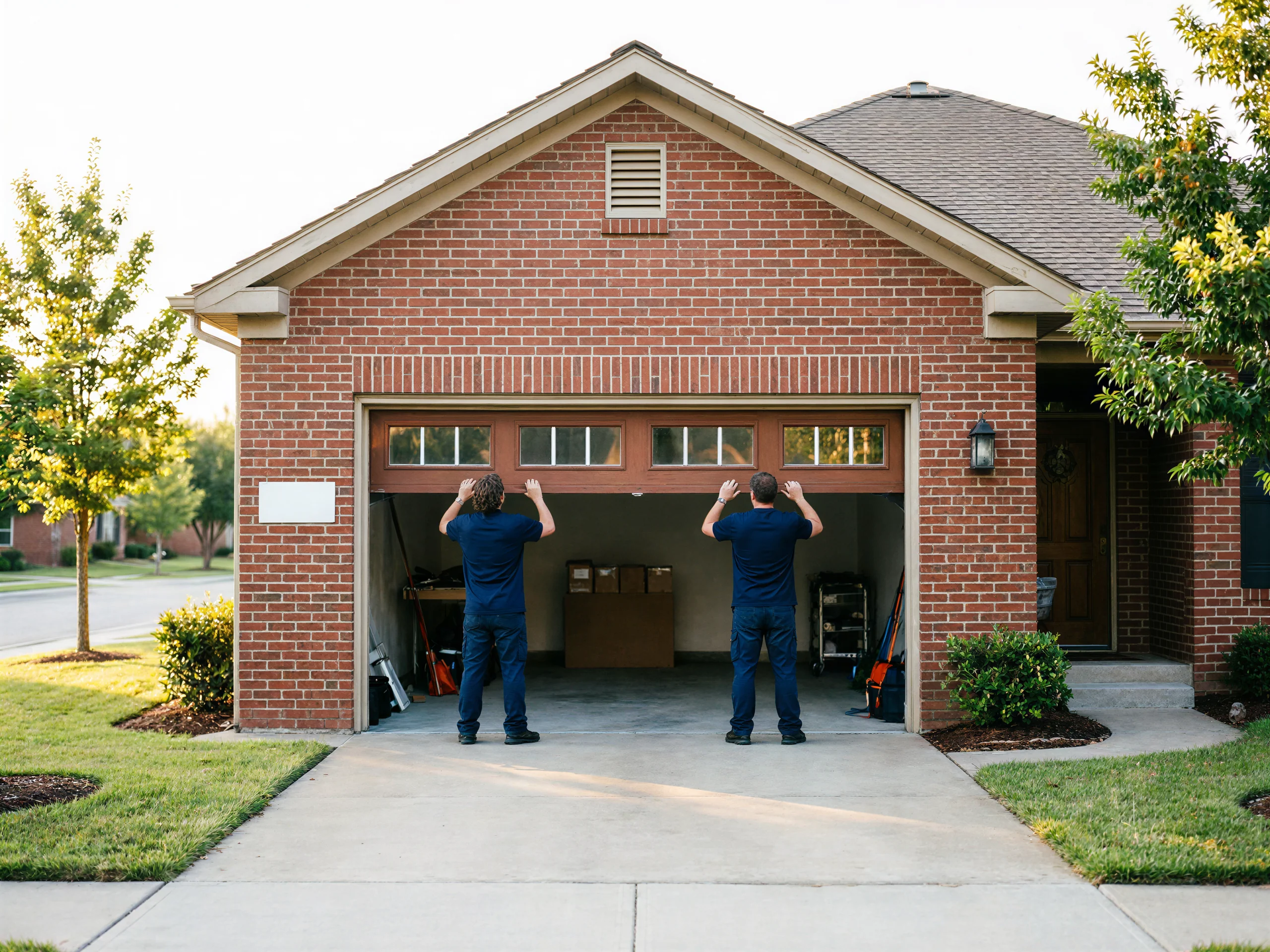
If the door feels heavy to lift by hand with the opener disconnected, that's a spring that's lost tension and is a job for a technician, not something to force by hand. Rust streaks on the spring itself, visible fraying on the lift cables, or a track that's visibly bowed away from the frame are all signs worth a call rather than a wait.
Look before summer heat
None of these on their own mean the door needs replacing. On hardware this old, though, they're worth a look before the next hot stretch puts more strain on parts that have already done fifty years of work.
Talk to a local pro
Garage door service in The Woodlands?
Same-day service with honest, upfront quotes.