What the Fix Involves
Aldine is a smaller piece of the territory we cover from The Woodlands, about 4,196 households against the 18,369 spread across the whole service area.
Clustered failure points
That size matters less for marketing and more for what shows up on a work order: a small town built mostly in one era means the fixes cluster around the same handful of failure points instead of spreading thin across decades of door styles. Aldine's median home dates to 1971, fourteen years earlier than the service area's overall 1988 median.
Side-mounted torsion hardware
That gap is the whole story of the work here. A door installed in the early-to-mid 1970s is more likely to be an older sectional or even a one-piece door, running on side-mounted torsion hardware that newer parts trucks don't stock as a default item.
Identifying the door first
The fix usually starts with figuring out what's actually on the door before we touch a spring or a cable, because swapping in a modern bracket on an old frame can do more harm than the original problem. We're not guessing at this from a distance. We adjust what we bring based on the build era of the street we're going to, and Aldine's era points toward older hardware more often than not.
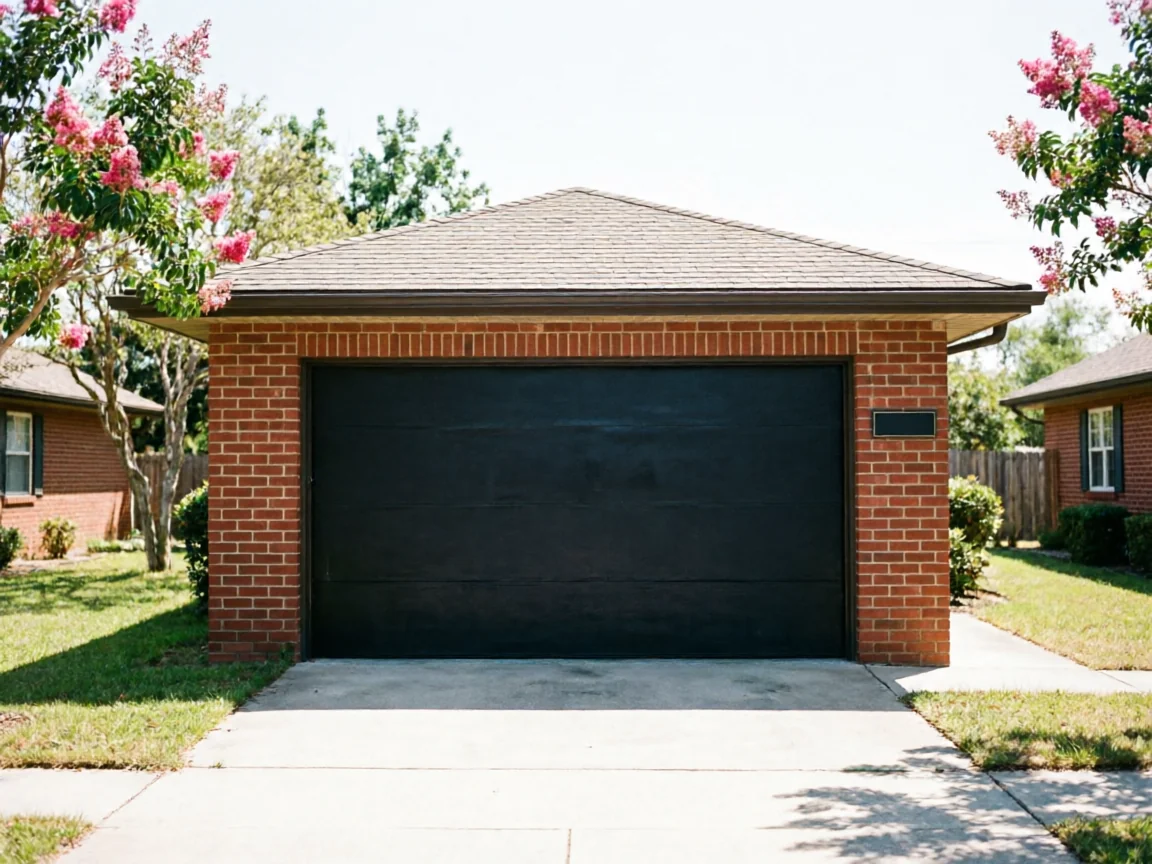
What Is on the Truck
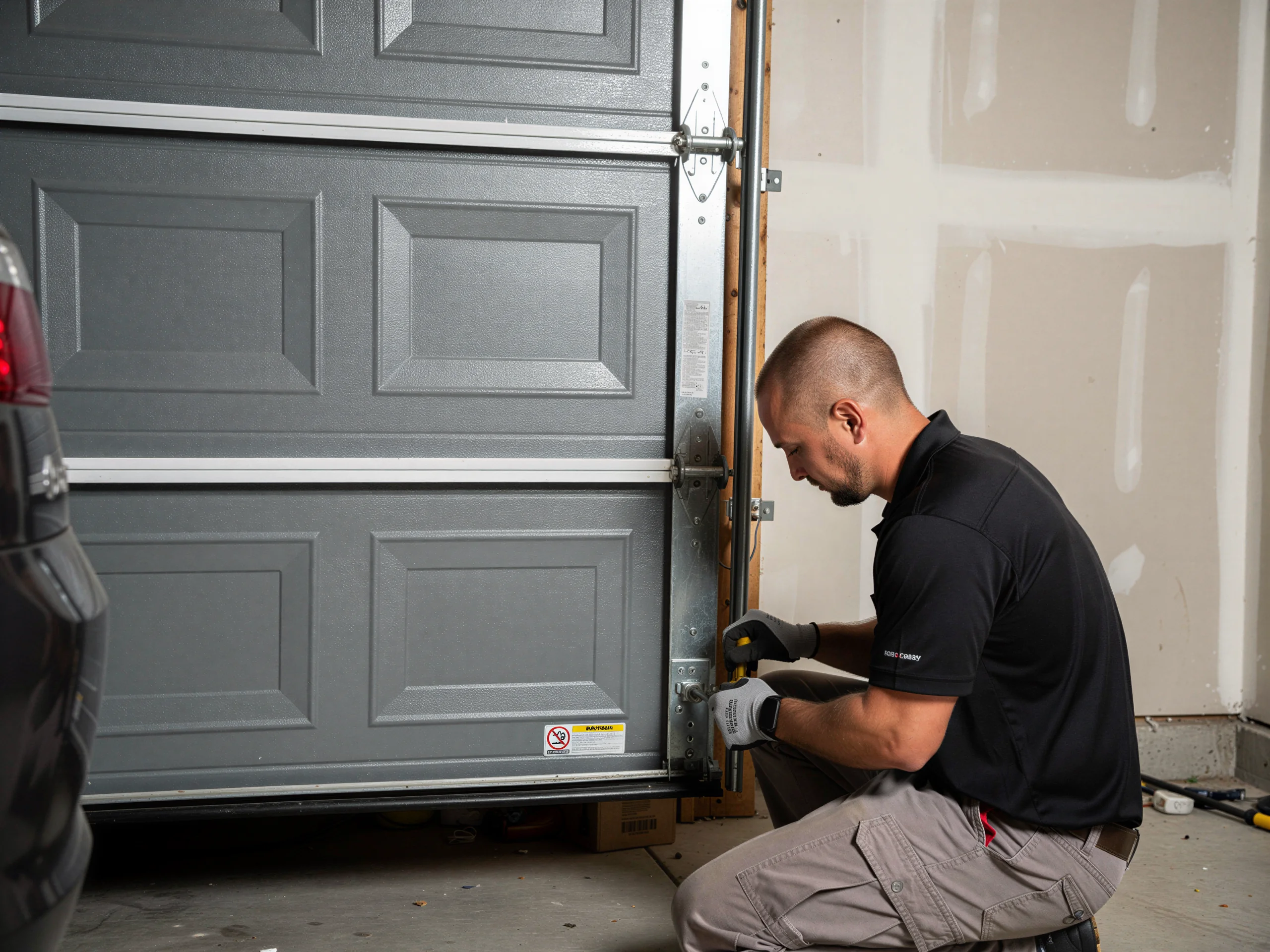
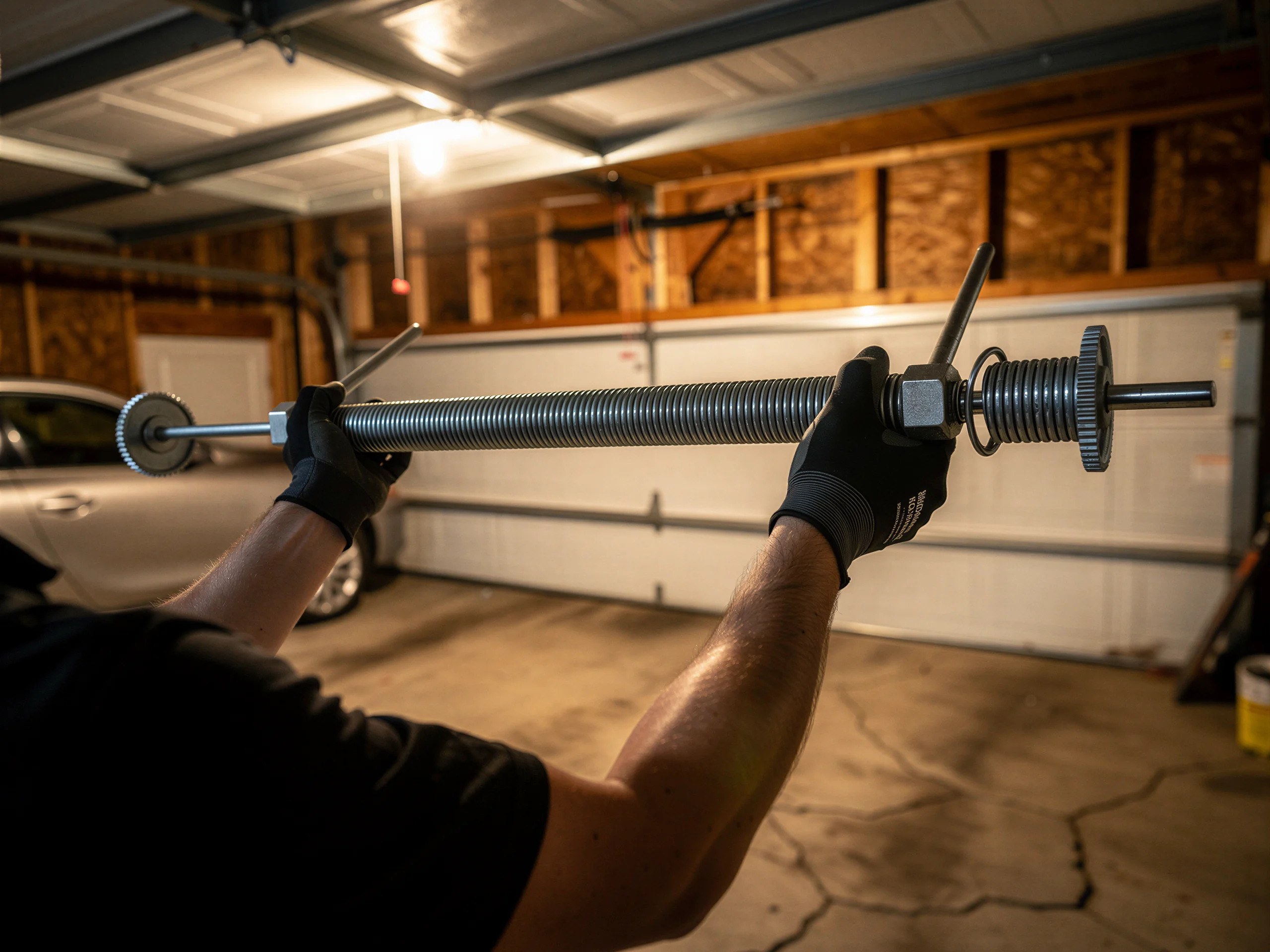
For a 1971-era door, the truck carries torsion springs in the sizes that matched that generation of construction, plus the older-style end bearing plates and flag brackets that newer kits sometimes skip.
Common-gauge rollers and cable
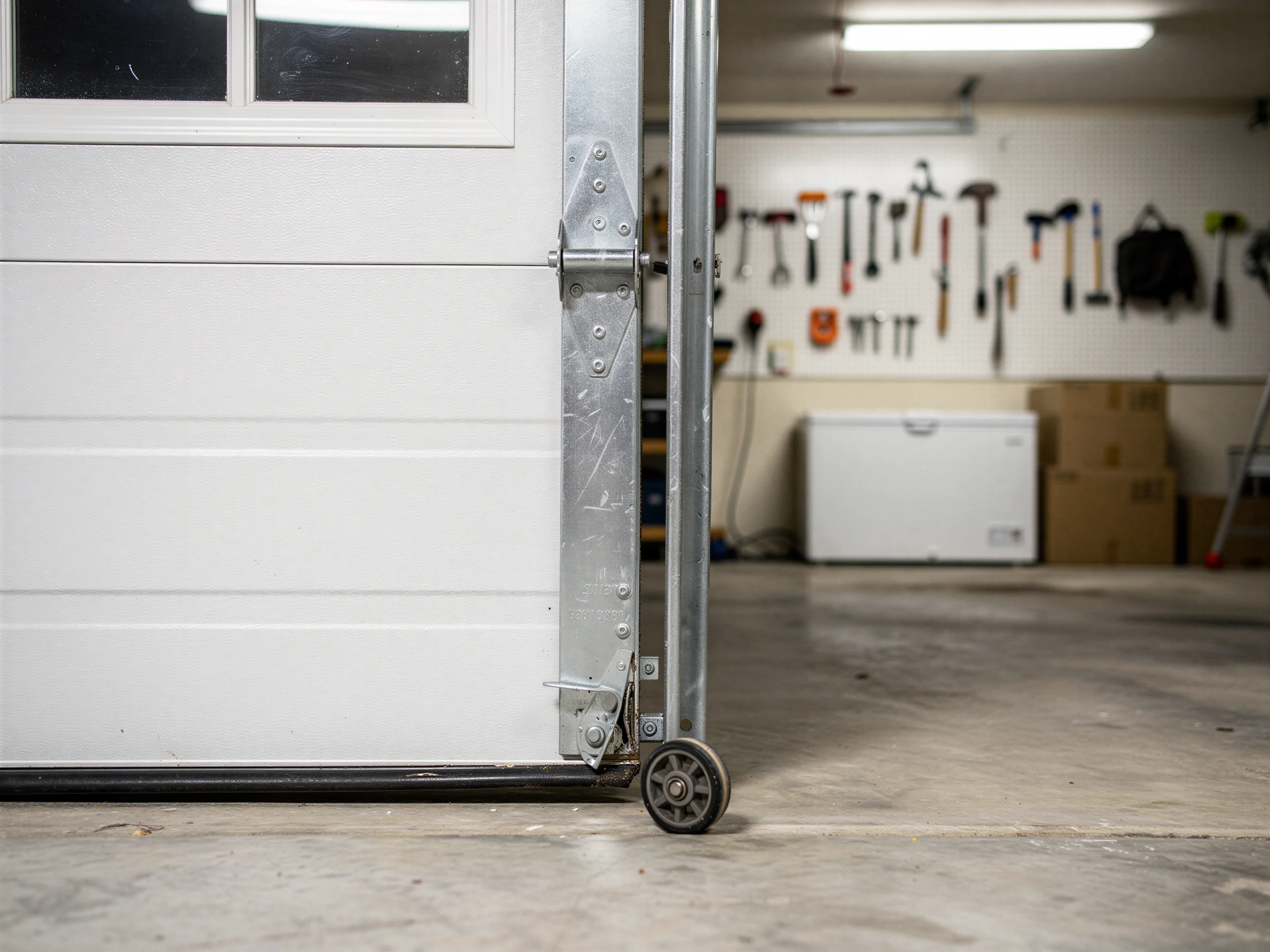
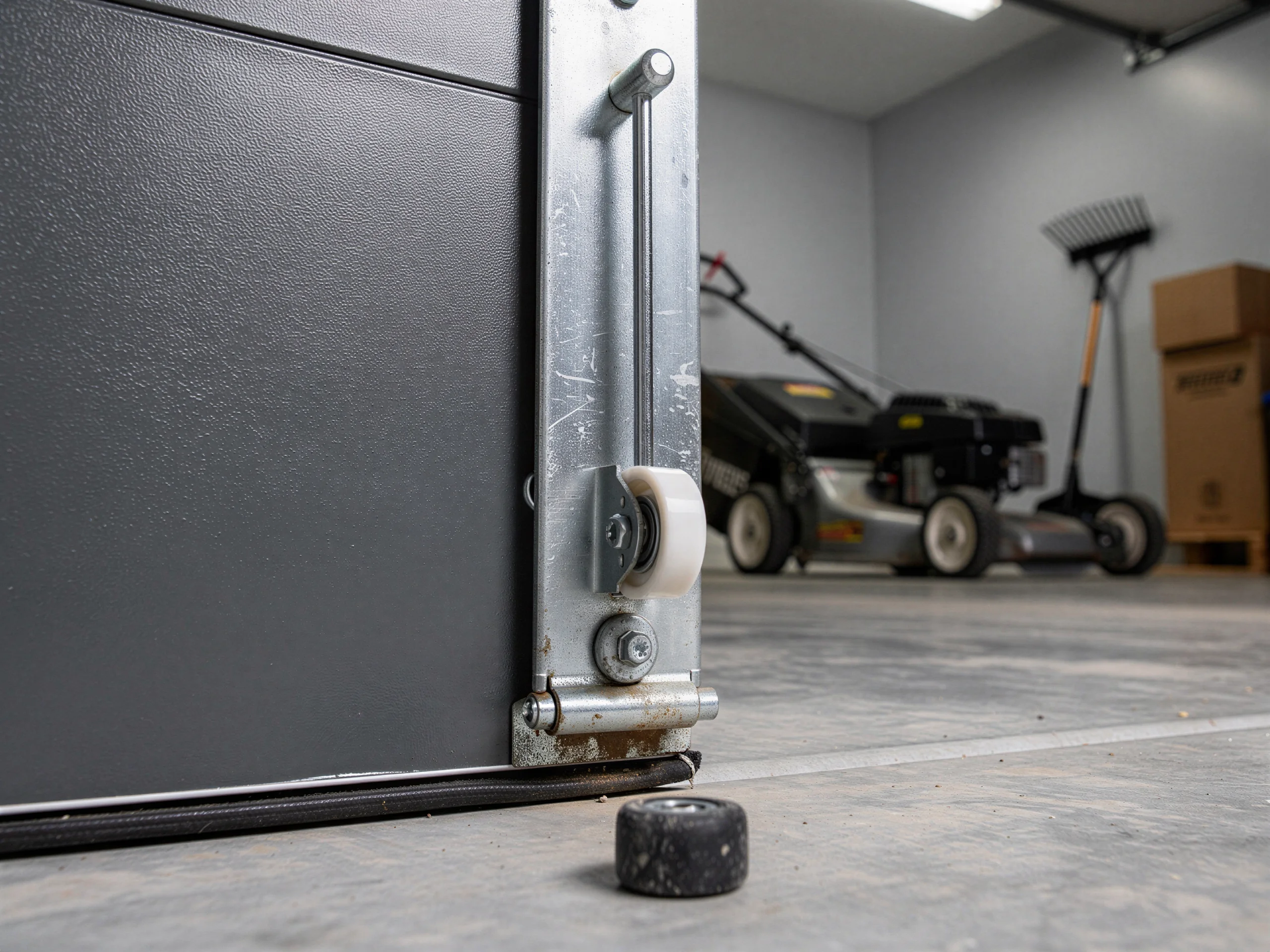
We also bring standard rollers and cable in common gauges, since those wear out on any door regardless of age. Where we run into limits: if a door is an original one-piece panel in unusual dimensions, or the track geometry is non-standard for that build year, we may not have the exact part riding along.
Trade-off of shared trucks
That's not a stall tactic - it's the honest trade-off of running one set of trucks across a wide area instead of stocking every obsolete size at a local depot. When that happens, we tell you up front what needs to be ordered and roughly what that does to the timeline, instead of forcing a part that doesn't fit.
Stocking for common failures
Most calls don't hit that wall. Spring breaks, cable snaps, and worn rollers are common enough across any era that the truck is built around them first, with the older hardware as a known second layer we plan for specifically because of what we know about the housing stock here.
How to Book
We cover Aldine from The Woodlands, roughly 20 miles out, so there's no local branch and we don't promise a same-day slot on this route the way we might on calls closer to home.
Booking after symptom check
What we can do is schedule the visit once we know what the door is doing - stuck, off track, spring snapped, opener dead - and bring the right hardware for a home of this era rather than a generic kit.
Area and service page links
Start at the area page for details specific to this part of the coverage map, or go straight to the main service page to see what the visit itself typically involves once we're on site.
Describing age and symptoms
Either way, the more you can tell us up front about the door's age and symptom, the less time gets spent diagnosing in the driveway. Links: Aldine area page and garage door service in The Woodlands.
What Can Go Wrong
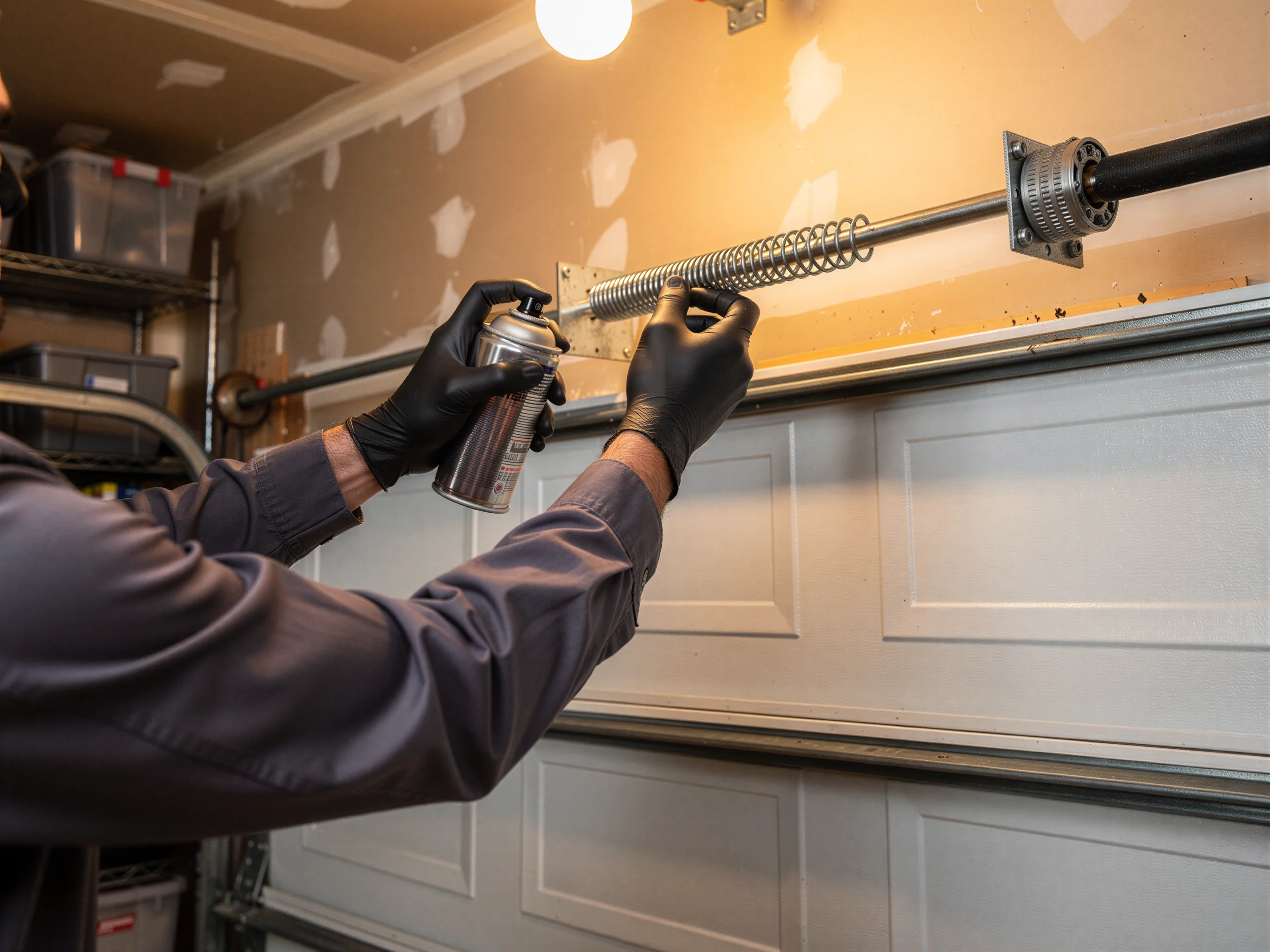
On a door this old, the torsion spring is usually the first thing to go, and on original hardware it can take the end bearing plate or the flag bracket with it if it's been sagging unnoticed for a while.
Frayed drum cables
Cables fray at the drum in the same stretch of years a spring starts going soft, so a service call for one often turns into a look at both. Openers from a later retrofit don't always match the door's original balance.
Overloaded chain-drive motors
If someone added a chain-drive opener to a door that was never rebalanced for it, the opener motor takes on load it wasn't built for, and it burns out early or strips the gear.
Galvanized hardware rust
That's a repair pattern specific to older doors that got modern openers bolted on without the spring weight being reset to match. Rust on the track and bottom brackets shows up more on older galvanized hardware than on anything installed in the last fifteen years, simply because it's had decades longer to sit.
Why This Fails Locally
At a median household income of $40,916, well under the $74,424 median across the broader service area, the math on repair versus replace lands differently here than it does on newer streets closer to The Woodlands. A full replacement that's an easy call on a higher-income block can be a harder decision on a fixed budget, which means more jobs here are genuine repairs aimed at getting another several years out of original hardware rather than jumping straight to a new door.
That's not a knock on the housing - it's just a different set of trade-offs, and it changes what we recommend. We'll tell you plainly when a spring or cable repair is worth doing on an old door and when the door itself is far enough gone that sinking more money into 1971-era hardware doesn't make sense anymore. We'd rather say that than sell a repair we know won't hold.
What You Are Seeing
A door that drops fast and hard instead of lowering smooth almost always means a broken or weakening torsion spring - common on original hardware from a build year this old. A door that opens partway then stalls, or that the opener grinds without the door moving, usually points to a stripped gear or a cable that's slipped off the drum.
Grinding or popping sounds from the track area, especially on a day with no unusual weather, often trace back to a bent track or a roller that's worn through its bearing - both more likely on hardware that's been in place for decades. If the door looks uneven when it closes, hanging lower on one side, that's a cable or spring imbalance, and it's worth a call before the door comes off the track entirely.
Talk to a local pro
Garage door service in The Woodlands?
Same-day service with honest, upfront quotes.